Before you buy that raffle ticket: how 50/50s and raffles work in B.C.
Who's allowed to run a raffle in B.C., what the licence number tells you, where the money has to go, and how to read the odds, using the school Foundation's Lucky Langley draw as the worked example.
- Example
- The Lucky Langley 50/50 and Raffle, run by the Langley School District Foundation
- Raffle prize
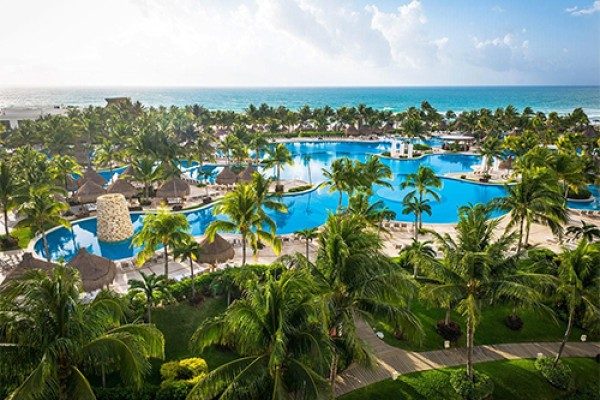
- A 7-night "Gems of Mexico" stay at a Mayan Palace resort (Riviera Maya, Nuevo Vallarta or Puerto Peñasco) for up to four people. Flights and meals not included
- Raffle tickets
- $10, 3 for $25, 8 for $50, 20 for $100. No more than 2,871 tickets
- 50/50 tickets
- 3 for $20, 10 for $50, 25 for $100, 150 for $500. Payout capped at $9,990
- Who can buy
- 19 and older, and you have to be in B.C. when you buy
- Sales close
- The official rules say midnight, Wednesday, December 16. The sales page says Tuesday, December 15, so buy by the 15th to be safe
- Draw
- Thursday, December 17, 2026, at the School Board Office, 4875 222 Street (noon in the official rules; the sales page says 11 a.m.)
- Licences
- B.C. Gaming Event Licence #177031 (raffle) and #176987 (50/50)
- Buy
- lsdf.rafflenexus.com
Somewhere between Halloween and Christmas, every second organisation in town starts selling tickets. School foundations, hospital foundations, minor hockey, the rodeo, the Rotary club. Most of them are exactly what they look like. A few things on your screen are not, and B.C. gives you a simple way to tell the difference before you hand over your card number.
We’re using the Langley School District Foundation’s Lucky Langley draw as the example, because it’s on right now and because its paperwork is unusually easy to read.
Who is allowed to run a raffle
Short answer: not just anyone, and never without a licence.
Under the Criminal Code, a lottery (and a raffle or 50/50 is a lottery) can be run by a provincial government, or by a charitable or religious organisation that holds a licence from the province. In B.C. that licence now comes from the Independent Gambling Control Office, which took over from the old Gaming Policy and Enforcement Branch when the province’s new gaming law came into force on April 13, 2026.
That’s why the “50/50 for my kid’s tournament fees” post that gets shared around Facebook, with no licence number and an e-Transfer to someone’s personal email, isn’t legal however good the cause is. Nobody checks that the draw is fair, nobody checks where the money goes, and there’s no one to complain to if the winner turns out to be the organiser’s cousin.
What the licence number tells you
Any licensed raffle has to put its licence number in its advertising. Lucky Langley shows two, one for the raffle and one for the 50/50, because each type of event needs its own licence.
The class of licence also tells you something about what you’re looking at:
- Class A is for charitable and religious organisations: registered charities, parent advisory councils, sports associations and the like. It’s the only class that can use an electronic raffle system, meaning online sales through an approved provider and a computer draw.
- Class B is for small community fundraising groups, and even individuals raising money for a charitable purpose or community benefit. Under the current guidance it’s capped at $20,000 raised, $500 per prize and $2 per ticket, and the draw has to be done by hand.
- Class C is for designated fairs and exhibitions.
So if something is selling $25 tickets online for a vacation package with a computer draw, it should be a Class A charity raffle run through a registered provider. Lucky Langley is: it sells through Raffle Nexus and draws its winners with random number generator software.
Where the money has to go
This is the part most people never think about. A licence comes with strings attached:
- Proceeds can’t go to anyone’s personal gain or pay down the group’s debts.
- The money has to support the eligible programs the group described when it applied, in B.C. Spending it elsewhere needs special approval.
- A group expecting more than $20,000 a year from gaming has to keep a separate gaming bank account, and every licensee reports its revenue and payouts to the regulator after the event.
For Lucky Langley, the Foundation says the money goes to K-12 mental health programs, literacy, weekend food for students and scholarships. Its last annual report (July 2025 to June 2026) gives a sense of scale: 462 students got weekend food bags, 1,047 private counselling sessions were approved, and 336 scholarship awards were handed out. The Advance Times reports the previous Lucky Langley draw raised more than $30,000. This is the draw’s sixth year.
How a 50/50 actually pays
A 50/50 is what the rules call a percentage raffle: the prize is a set share of ticket sales, paid out exactly as advertised. Half goes to the winner and half to the cause. The pot grows as people buy, which is why the number on the page keeps climbing (it was a little over $2,000 when we checked in late October).
Lucky Langley caps its 50/50 payout at $9,990, so the most the winner can take home is just under ten grand. Percentage raffles also have to pay cash, not prizes.
Your odds, done honestly
The raffle side has a hard ceiling of 2,871 tickets. If every one sells, a single ticket is a 1-in-2,871 shot at the Mexico trip. The 20-pack for $100 gets you to roughly 1 in 144. If fewer tickets sell, your odds get better. The 50/50 works the other way: more sales means a bigger pot, but each ticket’s share of the chances gets smaller.
Most people buying a school foundation ticket aren’t doing it for the odds, which is the right way to think about it. Buy what you’d be happy to give anyway.
Five checks before you buy anything
- Find the licence number. No number in the ad or on the sales page means walk away.
- Check who’s running it. It should be a named organisation, not a person. If in doubt, look the group up in the CRA’s list of registered charities.
- Look at how you pay. A card payment through a raffle platform or the organisation’s own site is normal. An e-Transfer to a personal email is not.
- Read the rules of play. A licensed raffle publishes them: ticket limits, draw date, location, and how winners are contacted. Lucky Langley’s even say that board members and staff involved in running it can’t buy tickets.
- Never pay to claim. Licensees aren’t allowed to charge you a fee to collect a prize. A “you’ve won, just cover the processing fee” message is a scam.
The questions people actually ask
Do I pay tax if I win? Generally no. In Canada, lottery and raffle winnings for a casual player are treated as a windfall, not income. Any interest you earn on the money afterwards is taxable as normal.
I’m visiting from Alberta. Can I buy one while I’m here? For Lucky Langley, yes, as long as you’re in B.C. when you buy. Its rules say tickets can only be sold and bought in the province.
Can my 17-year-old buy one? No. You have to be 19. If a ticket bought in a minor’s name wins, the rules say the prize goes to the parent or guardian.
Can I watch the draw? For Lucky Langley, yes. It happens at the School Board Office on 222 Street, and any ticket holder may attend. Winners are posted on the raffle site the same day.
What if something seems off? Email the organiser first; Lucky Langley’s rules point complaints to the Foundation by email. For a raffle you think isn’t licensed at all, the Independent Gambling Control Office’s charitable gaming team takes questions by email at [email protected].
If buying tickets has stopped being fun, B.C.'s Problem Gambling Help Line is 1-888-795-6111, and bcresponsiblegambling.ca has the rest.