Langley City council, February 23: the seniors' centre gets its liquor licence, and a push to legalize e-scooters in bike lanes
Langley City council adopted a liquor primary rezoning for the seniors' centre, new rules for emergency radio coverage in buildings, and motions on micro-mobility and closed captioning.
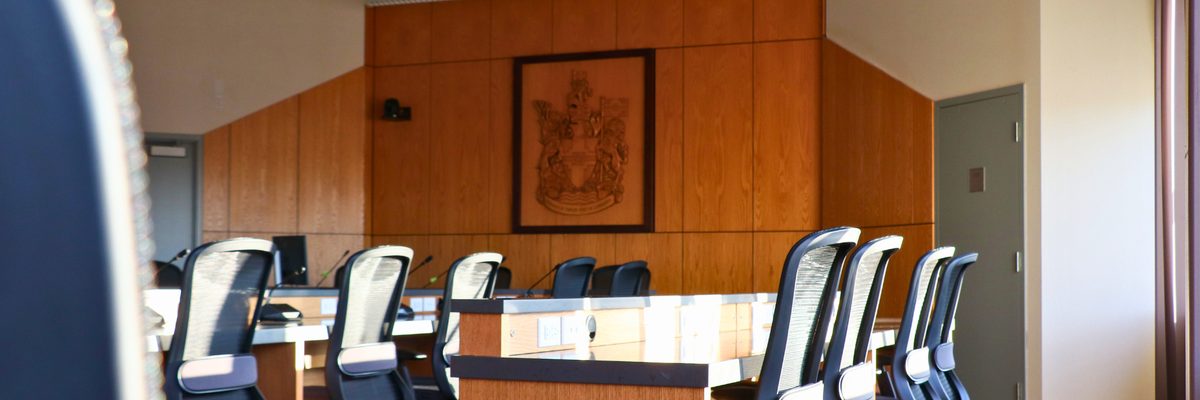
- Meeting
- Regular Council Meeting, Monday, February 23, 2026, Langley City Hall
- Official record
- Minutes (PDF) · Agenda and reports
Council opened with a moment of silence for the community of Tumbler Ridge.
A liquor licence for the seniors’ centre
After a public hearing at which no opposition was received, council gave third and final reading to Bylaw 3329 and supported a liquor primary licence for the Langley Senior Resource Recreation Centre at 20605 51B Avenue. The licence is for up to 250 people, from 9 am to midnight, on behalf of the Langley Senior Resources Society.
Why it matters: the centre rents its hall out and runs events. A permanent liquor primary licence means it doesn’t need a special event permit every time, which makes the hall easier to book for events. The trade-off councils usually weigh with any liquor primary is noise and late-night activity for the neighbours, which is what the public hearing is for. In this case nobody came forward to object.
The Province makes the final call on liquor licences. The City’s role is to say whether it supports one, which council did.
Two bylaws adopted
- Road Closure Bylaw 3311 closes a 94.1 m² strip of road east of 4505–4525 200A Street, which the City is selling to the developer next door.
- Radio Amplification Bylaw 3333 requires certain buildings to have systems that let firefighters’ and police radios work inside them. Big concrete buildings and underground parkades can block radio signals, which is dangerous in an emergency. This is common in cities building up.
E-scooters and e-bikes in bike lanes
Councillor Albrecht’s motion carried to send a resolution to the Lower Mainland Local Government Association and the Union of BC Municipalities asking the Province to create a legal class for personal mobility and micro-mobility devices, like e-scooters and e-unicycles, so they can be used in bike lanes.
Right now many of these devices sit in a legal grey area in BC outside approved pilot projects. Supporters of a clear class say it would let riders use bike lanes instead of sidewalks or traffic lanes. Others raise safety, speed and enforcement concerns. A municipal resolution doesn’t change the law; it asks the Province to.
Closed captioning for meetings
Councillor Mack’s motion to add closed captioning to council meeting video carried after an amendment that it be done “if possible, within existing staff and financial resources.”
More background: How to read a council agenda · City vs Township: who does what