From the back of a truck to 15,000 square feet: Royal Rigging in Gloucester
Royal Rigging started as a few tubs of gear in the back of a crane operator's truck. Four years on, it builds and inspects the slings that hold up some of the biggest jobs in the Lower Mainland, from a shop on Gloucester Way.
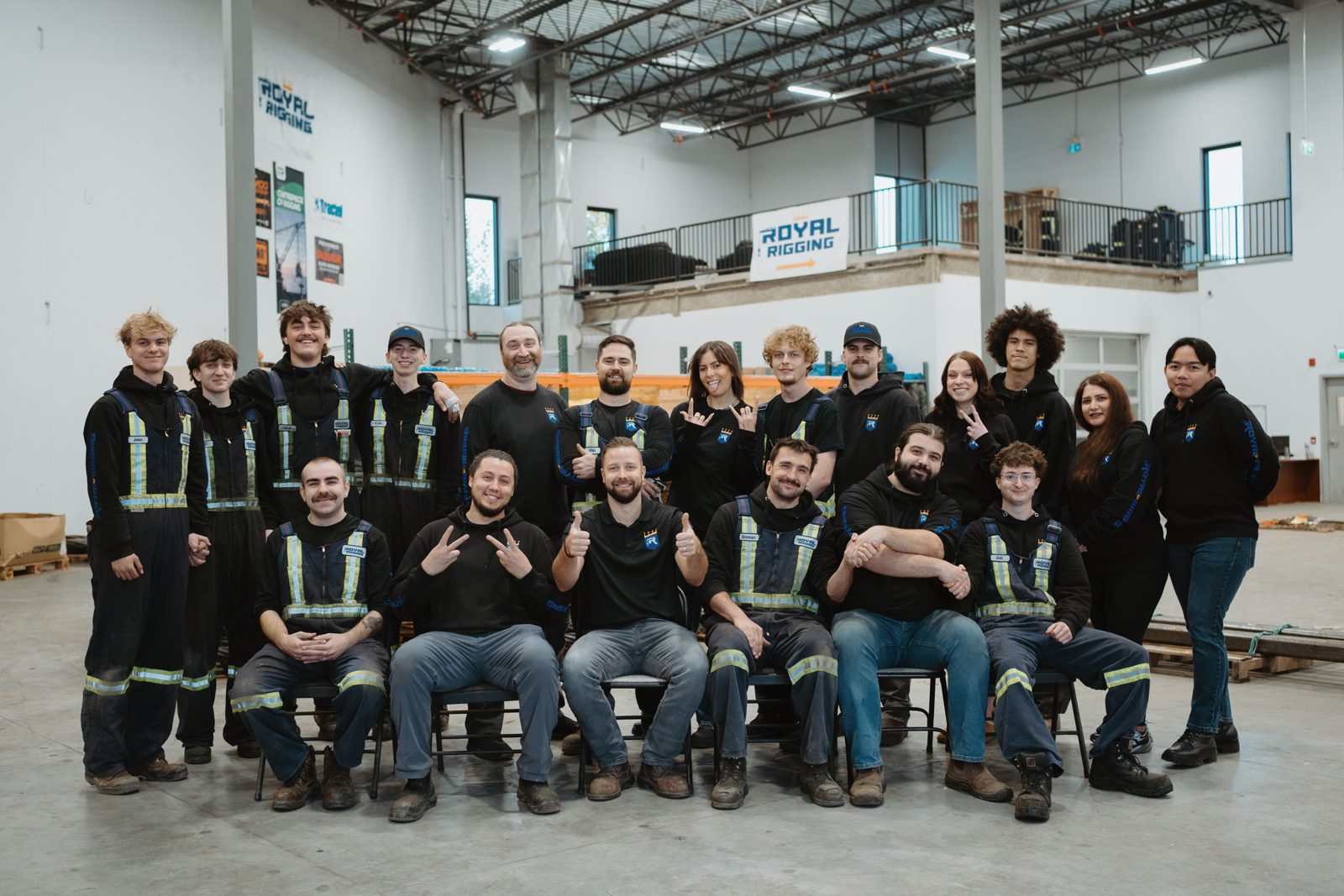
Most of the big things being built around the Lower Mainland right now hang, at some point, from a sling. Somebody has to build that sling, test it, tag it and check it again next year. A lot of that work happens in a shop on Gloucester Way, in the industrial park on Langley’s eastern edge, at a company that didn’t have a shop at all a few years ago.
Royal Rigging started with owner Colton Roy, a crane operator with more than a decade in construction, agriculture, and oil and gas. According to the company’s own timeline, he was buying and selling rigging gear out of his truck and a small storage locker while still running cranes. A 2024 profile in the trade magazine Wire Rope Exchange describes those early days as a few tubs of rigging in the back of a truck.
We asked Royal Rigging how it got from there to here, and what the rest of us should know about the gear that holds everything up.
Four years, four moves up
The timeline on the company’s site reads like a growth chart:
- 2021 to 2023: gear sold from a truck and a storage locker, alongside a full-time crane job.
- September 2023: a first shop, with a pull-test bed for testing and re-certifying chain and wire rope slings.
- 2024 to 2025: Colton leaves the crane industry to run the business full time, and it moves into its first dedicated single-bay shop.
- November 2025: a first flat-deck delivery truck.
- April 2026: the jump from about 3,000 square feet to a 15,000-square-foot facility on Gloucester Way, plus a new on-site inspection and asset-reporting service.
Staff numbers followed the same curve. The site counts three full-time employees in May 2025, nine in March 2026 and 12 by June. The crew photo they sent us this month is quite a bit bigger again.
So what does that much more room actually change? “The new space has allowed us to expand our staff, machinery, and the quantity of work we can handle,” Royal Rigging told us. The practical difference for customers is stock on the shelf. “We can store more items so that when clients need immediate rigging, they don’t have to wait for materials to be brought in.” More machines keep turnaround times down as the volume goes up, and the extra floor space means they can take on clients running larger projects.
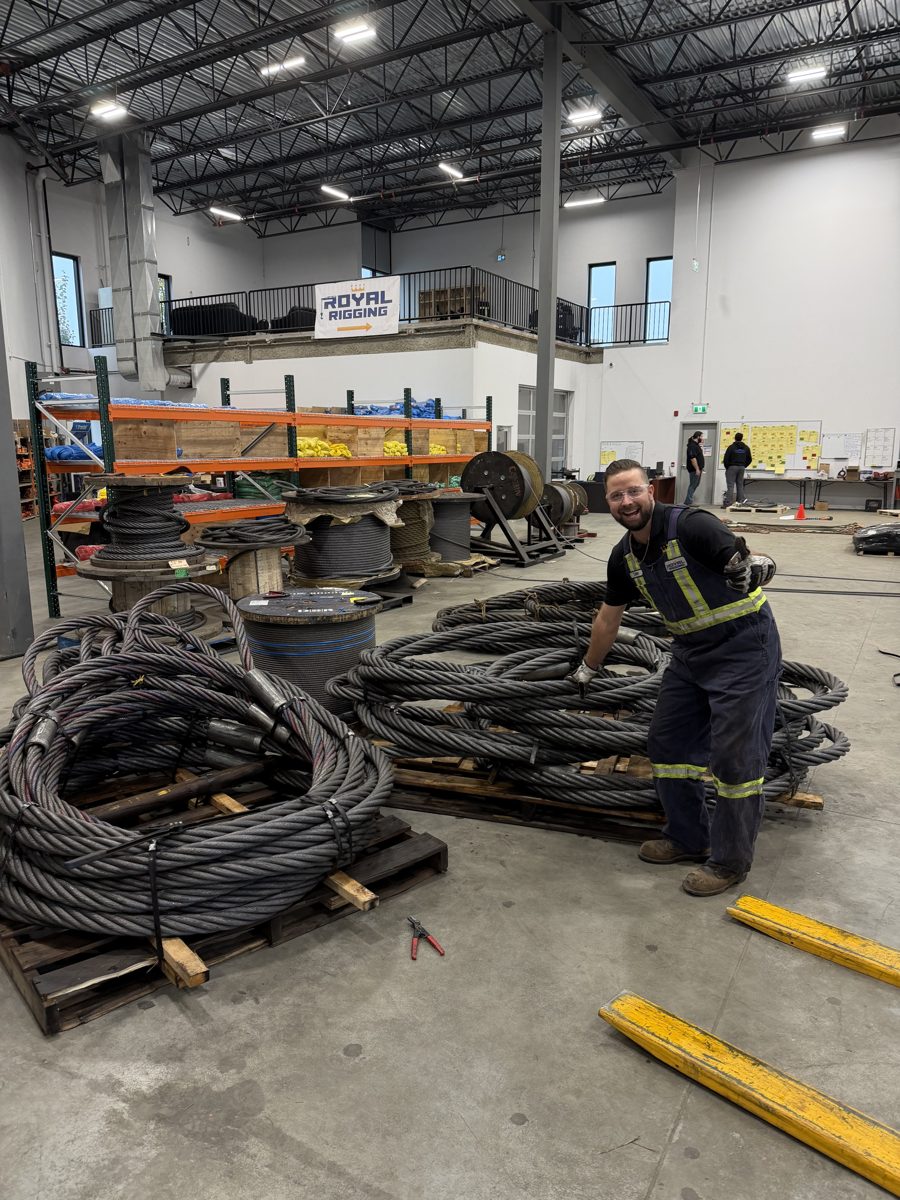 Photo: Royal Rigging
You’ve probably driven past their work
Ask which jobs people would recognize and the answer is a long list. Royal Rigging says it’s currently working on the Highway 1 expansion, hospital work in Surrey, several condo builds in Vancouver, LNG, Whistler Blackcomb and the Port of Vancouver. “You will see our work on cranes, delivery trucks, civil construction sites, tower cranes, marine projects, and more,” they told us.
Next time you’re crawling along Highway 1 past a crane, there’s a decent chance some of what’s hanging off it came out of Gloucester.
The part nobody thinks about
We asked what people outside the trades should know about lifting and rigging safety. The answer was more about the industry than the public.
“Rigging is often seen as an afterthought, but it is the most critical piece of any job site as it connects everything,” Royal Rigging said. Their wish is “a standardized system for training and ticketing so that there would be uniformity,” because so many of the technical details “are required for proper use and this is often missed on job sites.”
That isn’t just one shop’s opinion. In 2025 WorkSafeBC told the Journal of Commerce that there is currently no requirement for formal training or certification for rigging in BC, and the same piece noted there’s no standard course curriculum: training providers issue their own certificates. That’s starting to change. On October 28, 2026, WorkSafeBC announced it is supporting CSA Group in developing a national standard for rigging and hoisting competencies, with consultations expected in spring 2027 and implementation planned for late 2027. WorkSafeBC is also reviewing Part 15 (Rigging) of BC’s workplace safety regulation, with changes to rigger training, assessment and qualification expected.
What the rules already say
If you run a small crew, a farm or a shop that lifts things, here’s what BC’s Occupational Health and Safety Regulation already requires, in plain terms (the full text is in Part 15 on WorkSafeBC’s site):
- Who can rig
- Rigging and slinging must be done by, or under the direct supervision of, qualified workers (s. 15.2).
- Every shift
- Slings and attachments get a visual inspection before use on each shift, and anything defective comes out of service right away (s. 15.31).
- Every year
- Alloy chain slings must be thoroughly inspected at least once a year, with a record kept (s. 15.50).
- New or repaired
- New, repaired or altered slings are proof tested before going into service (s. 15.36).
- Tags
- Wire rope slings with swaged or poured sockets or pressed fittings, and alloy chain slings, must be permanently marked with their working load limit and maker, among other details (s. 15.42, 15.46).
That yearly cycle is why a shop like this stays busy. Back in 2024, Colton told Wire Rope Exchange that because rigging needs to be inspected yearly, the test bed would run continuously, and that a lot of the gear coming in was overdue for inspection, outdated or broken.
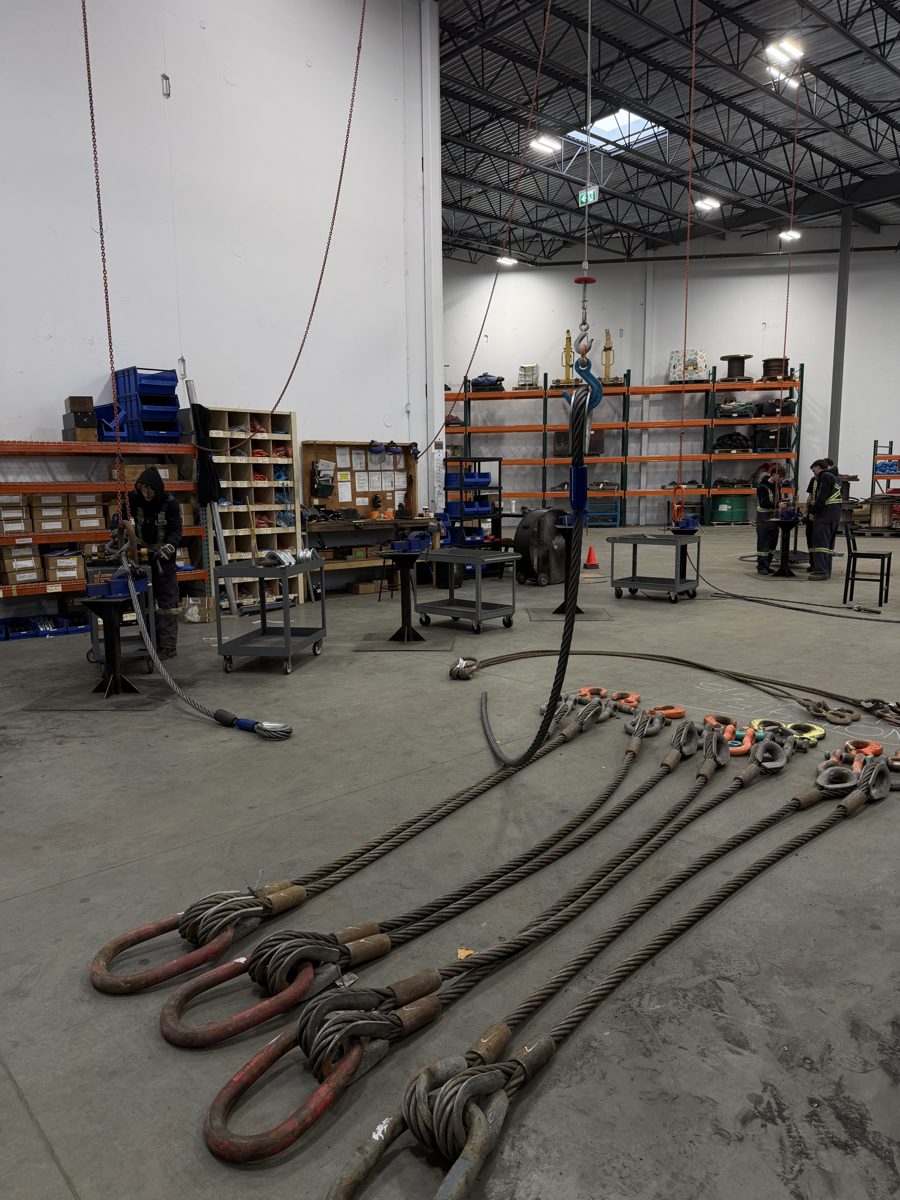 Photo: Royal Rigging
Want in? Start on the shop floor
For a young person in Langley curious about the trades, Royal Rigging’s advice is simple: start on the shop floor as a rigger. “By doing that you gain hands on experience building custom assemblies, inspecting and identifying rigging, and learning how to use it.”
And the timing could be good. When they answered our questions in late November 2026, Royal Rigging told us they’re hiring. Openings change, so check the company’s website for what’s current.
If you’re still in high school, Langley’s schools run free trades programs you can start before you graduate. We broke them down in our guide to trades training in Langley schools.
- Royal Rigging
- 26550 Gloucester Way, Unit B100, Langley (Gloucester industrial park, near Aldergrove)
- What they do
- Wire rope and chain slings, custom lifting assemblies, rigging and load-securement gear, pull testing, inspection and repair, delivery, and on-site inspections
- Website
- royalrigging.ca
Thanks to the team at Royal Rigging for answering our questions and sending photos. This piece is part of our series on the businesses that make things in Langley’s Gloucester industrial area.