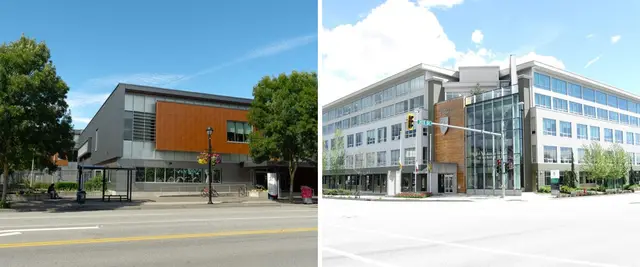
- City of Langley water
- All from Metro Vancouver's Coquitlam Lake source · questions 604-514-2910 (City)
- Township of Langley water
- About 94.5% Metro Vancouver, 5.5% Township wells serving Aldergrove and Acadia (2025)
- Latest reports
- City 2025 · Township 2025
- After-hours water emergency
- 604-543-6722 (both the City and the Township list this number)
- Private well testing
- Township Private Well Network: free to join, 20% off lab tests
- Last checked
- November 17, 2026
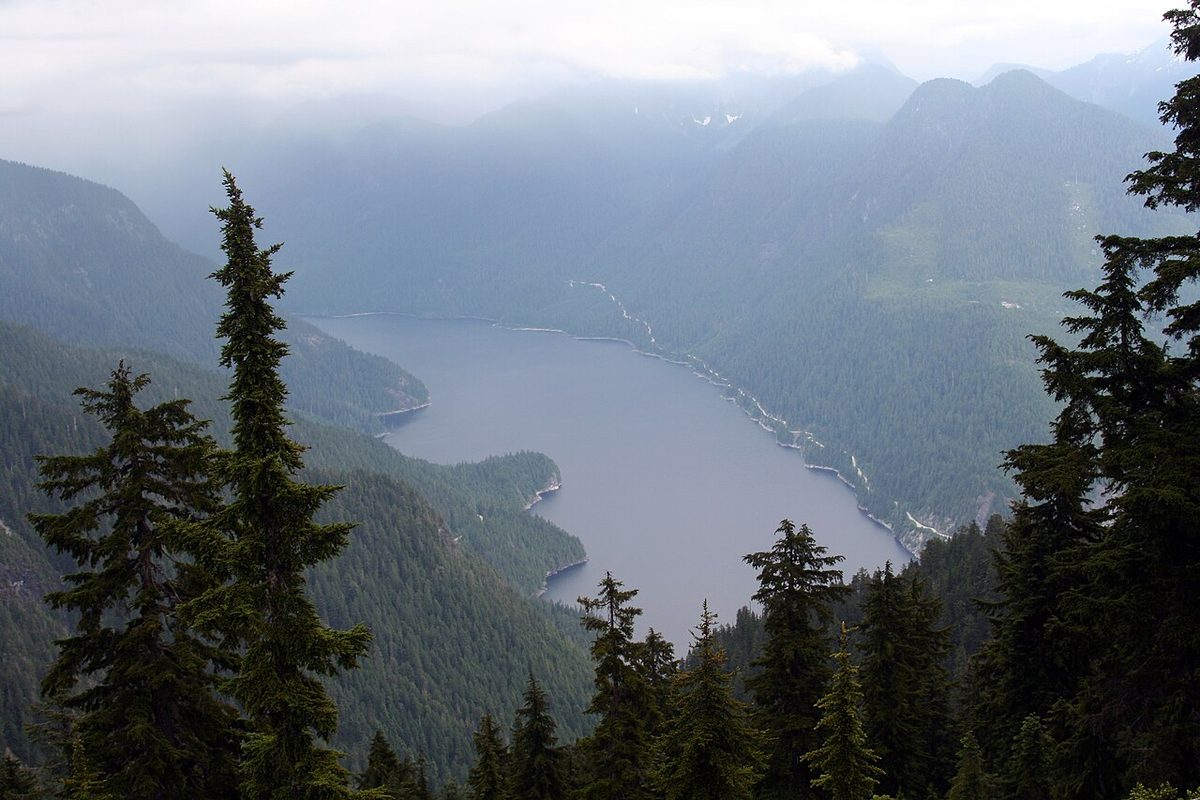
If you live in the City of Langley, your tap water comes from Coquitlam Lake in the mountains above Coquitlam. If you live in most of the Township, it’s Metro Vancouver water too. The exception is Aldergrove and the Acadia area, where part of the water comes up from the ground through Township wells. Every one of the 691 samples the City tested in 2025 met provincial standards, and the Township’s results were nearly as clean. Here’s what’s behind those numbers.
City of Langley: one source, Coquitlam Lake
The City doesn’t treat its own water. It buys treated water from Metro Vancouver, drawn from Coquitlam Lake, and runs it through its own pipes to about 35,700 residents. At Coquitlam the water is treated with ozone, ultraviolet light, soda ash and chlorine, and it gets a second dose of chlorine at Clayton Hill in Surrey on the way here. It enters the City system at Fraser Highway and 196 Street. The City’s reservoir at 200A Street and 47A Avenue holds 22.7 million litres.
What the 2025 report found:
- 691 samples from 14 sampling stations, an average of 58 a month against the 36 required. All met the provincial Drinking Water Protection Regulation.
- No E. coli in any sample.
- Lead at all six test sites was under 0.5 micrograms per litre, against a guideline of 5.
- Disinfection by-products (THMs and HAAs) were under Health Canada’s limits.
The report is upfront about two things. At four stations, 102 samples had less chlorine left in them than the 0.2 mg/L target (down from 122 in 2024), with no sign of bacteria. And in August, September and October the water ran warmer than the 15 °C aesthetic objective, an aesthetic (taste) objective rather than a health limit.
Township of Langley: mostly Metro, partly wells
The Township supplies about 135,000 people. In 2025, 94.5% of its water came from Metro Vancouver and 5.5% from eight Township wells: two serving Acadia and six serving Aldergrove, where well water is blended with Metro water. Everyone else in the Township is on a private well or a small private system.
Older well systems are gone. The 2024 report lists wells in Fort Langley, Brookswood, Murrayville and Willoughby as fully decommissioned that year, so those neighbourhoods no longer draw on Township wells.
Aldergrove’s groundwater is naturally high in manganese and nitrate. It’s blended, treated and filtered at the Aldergrove Water Treatment Plant before it reaches taps, and the report says the result meets the guidelines.
What the 2025 report found: more than 1,500 samples, an average of 128 a month against 94 required. Eleven tested positive for total coliform bacteria (nine in the pipes, two at source), and the Township says each was dealt with quickly; 99.33% of samples were clear. A new rechlorination station went in at the Brawn Pump Station in 2025.
Is there fluoride in Langley water?
Metro Vancouver’s own lab results for 2025 show treated fluoride at under 0.05 mg/L from all three reservoirs, so effectively none (GVWD report).
Is Langley water hard or soft?
Very soft. The same Metro Vancouver report puts average hardness at 2.4 mg/L (as calcium carbonate) for Coquitlam water and about 20 mg/L for Capilano and Seymour. Aldergrove’s well-blended water may differ; the Township report has the detail.
Lead pipes and the morning tap
The City’s water report gives simple advice for older plumbing: if a tap hasn’t run for six hours or more, like first thing in the morning, run the cold water until it turns noticeably colder. Use only cold water for drinking and cooking, and especially for baby formula.
Boil-water notices
Fraser Health posts drinking water advisories. If one covers your area, boil water for at least one minute before drinking it. If you can’t boil, Fraser Health says you can add two drops (0.1 mL) of unscented household bleach to a litre of water and let it stand at least 30 minutes (Fraser Health).
The Township sends water emergency notices by email through its eNews; sign up from its water emergency plan page.
On a private well?
Testing it is up to you. The Township’s Private Well Network is free for any resident with a private well and gets you 20% off bacteria and general chemistry testing at Element Materials Technology, #104 – 19575 55A Avenue (604-514-3322) (details). Fraser Health’s private well owners page covers disinfecting a well and testing after a flood.
Sprinkling rules
Metro Vancouver’s Stage 1 lawn watering restrictions apply automatically every year from May 1 to October 15: even-numbered homes water on Saturdays, odd on Sundays, automatic sprinklers 5 to 7 am and hand watering 6 to 9 am (Metro Vancouver). They ended for 2026 on October 15, so there are no restrictions on until next May.
For the rest of what the two councils run, see Langley City Hall and the Township Civic Facility and the garbage and recycling schedules.
Last checked November 16, 2026. Spotted something out of date? Tell us.