- Darkest public spot
- Aldergrove Regional Park, 8 Avenue east of 272 Street (a RASC Vancouver observing site)
- Gates close
- 6 pm until December 31; 5 pm January 1 to February 2 (Metro Vancouver)
- Next big shower
- Geminids, best on the night of December 13–14, 2026, with no Moon in the way
- Organised night
- Meteor Shower Watch, Aldergrove Regional Park, Saturday, August 7, 2027, 8 to 11:30 pm, $20 per vehicle
- Club
- RASC Vancouver, free public lectures on the second Thursday of the month
- Last checked
- November 25, 2026
The best night of the year for shooting stars is coming up fast. The Geminids peak on December 14, 2026 at 14:00 UT, which is 7 am here, so the night to be outside is Sunday, December 13 into Monday the 14th. The International Meteor Organization’s 2026 calendar calls them the most reliable of the big annual showers, good for 100-plus meteors an hour in a dark sky at the peak, and this year there’s only a thin crescent Moon to compete with. The radiant in Gemini is up from early evening and highest around 2 am.
The catch in Langley is where to stand.
Where it’s dark enough
RASC Vancouver, the region’s astronomy society, keeps a short list of observing sites with darker skies than the city. Two of them are ours.
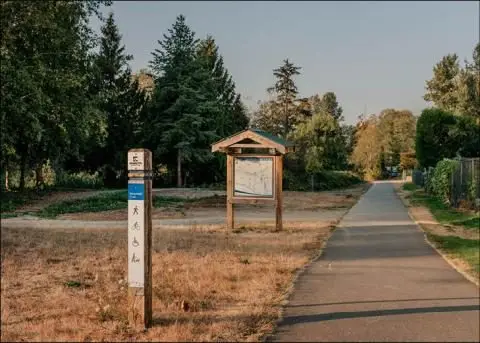
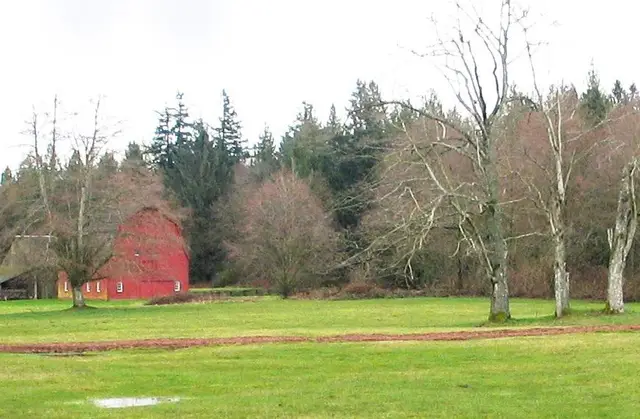
Aldergrove Regional Park. Farmland on every side and no big lit roads close by, which is why RASC calls the skies “reasonably dark.” The main day-use lot is on 8 Avenue east of 272 Street, on the Langley–Abbotsford line. It’s also where the summer meteor watch is held (below). See our Aldergrove Regional Park page for trails and parking.
Campbell Valley Regional Park. RASC notes the old racetrack inside the park is quite dark, but it sits behind a locked gate, and the society uses it for daytime solar viewing events rather than night sessions. See Campbell Valley Regional Park.
The rule that trips people up: parks close at night
Both are Metro Vancouver regional parks, and the gates follow the regional park hours: 7 am to 6 pm from November 3 to December 31, then 5 pm in January, stretching to 10 pm only from early June to late August. A December sky is dark well before 6, so a winter visit gets you the first part of the evening before the gate shuts, not a late-night Geminid session.
City of Langley parks are closed to the public and to vehicles from dusk to dawn year-round under the City’s parks bylaw (Bylaw No. 3048, section 16).
So for the Geminid peak, most people’s best option is their own yard or a friend’s in rural Langley, with the porch lights off. Don’t use a farm road shoulder as a viewing spot.
The one night a park stays open late for it
Metro Vancouver runs a Meteor Shower Watch at Aldergrove Regional Park each August for the Perseids. The 2027 date is already posted: Saturday, August 7, 2027, 8 to 11:30 pm, $20 per vehicle (up to eight people), with timed entry you register for. Tent camping that night is $40 per tent for up to four people.
Expect telescopes set up by volunteers, a lantern-lit planet walk on the trails and help finding constellations. Bring a blanket or chair, water, a flashlight and binoculars if you have them. Metro Vancouver is upfront that clouds and moonlight can keep counts low, and the IMO’s 2027 calendar does flag moonlight for next year’s Perseids, so treat it as a night out under the sky rather than a guaranteed show.
A sky calendar for the next year
From the IMO calendars:
| When | What | Worth it? |
|---|---|---|
| Night of Dec 13–14, 2026 | Geminids peak | Yes: strong shower, Moon out of the way |
| Dec 22, 2026 | Ursids | Weak, and two days before a full Moon |
| Early January 2027 | Quadrantids | IMO rates the 2027 peak as favourable |
| August 2027 | Perseids (and the Aldergrove watch on Aug 7) | The fun one, though moonlight affects 2027 |
Join a club or borrow the gear
RASC Vancouver (founded 1931) holds free public lectures at 7:30 pm on the second Thursday of each month, and when the weather cooperates the Trottier Observatory at SFU opens for viewing afterward. Check its site for the venue, which has moved between SFU and the H.R. MacMillan Space Centre this year. In partnership with Metro Vancouver it also runs solar observing at Campbell Valley each July and helps staff the Aldergrove meteor watch.
RASC also lists star parties around the province and in Washington state for when you want proper dark skies. Its own Nahatlatch Valley star party in the Fraser Canyon was cancelled in 2026 because of wildfires.
No telescope? The library lends them. See Borrow a telescope from the library in Langley.
Something out of date? Tell us.
Last checked November 24, 2026. Spotted something out of date? Tell us.