Beavers at work on the Little Campbell: what they're building, and where you can see it
Two new dams on the Little Campbell River in the future Fernridge Nature Park are doing what beavers do: making a wetland. A Q&A on why that helps the river, how the Township handles beaver floods, and the public trail where families can look for beaver work.
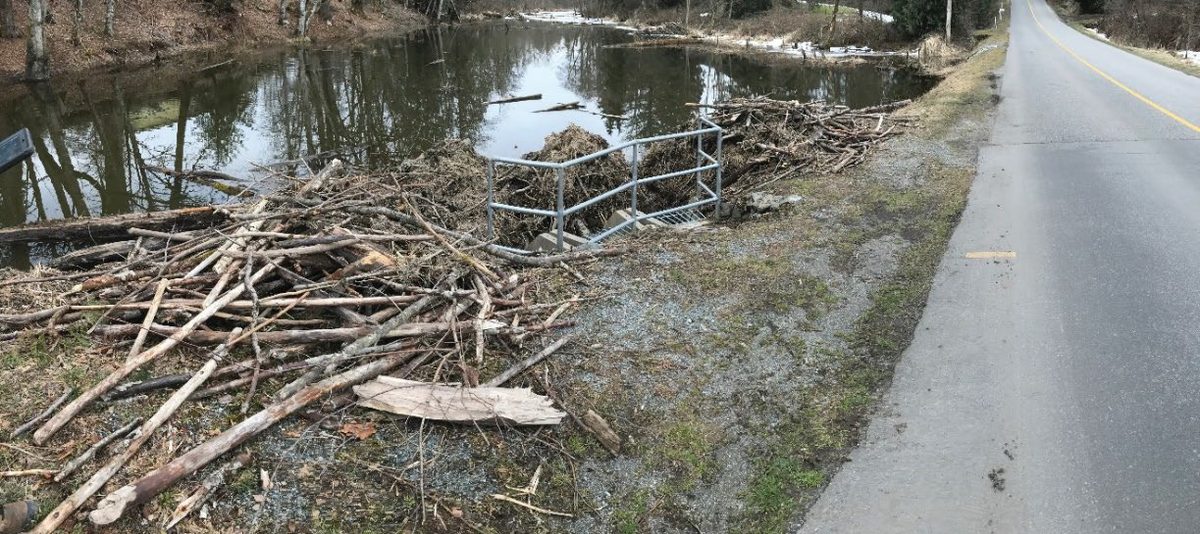
A member of the Langley Field Naturalists sent the Advance Times a photo this week of two beaver dams going up on the Little Campbell River, in the part of Brookswood-Fernridge that is slowly becoming Fernridge Nature Park. “Creating wetlands,” she wrote, and that is exactly what they are doing. Here is what is going on down there, in the questions people usually ask.
Where is this, and can I go?
The dams are on the Township land east of 200 Street near 27 Avenue that most people still call Horne Pit. It was a municipal gravel pit from at least the 1950s, finished by about 1990, and then left alone long enough for groundwater to fill the old pits and for cottonwood, alder and cattails to take over. Beavers, coyotes and mink moved in years ago. Township council voted in May 2026 to price the rest of the park: a viewing hill over the wetland, nature trails, washrooms, some parking and a sport court shared with the new Brookswood fire hall, on more than 50 of the old pit’s 75 acres. The 2026 capital budget carries $500,000 this year for the site’s reclamation and design, and the Township’s project page still says updates will follow.
So, not yet. There is no official entrance, trail, parking or hours, and the ground is a work site and a wetland. The Langley Field Naturalists and the Little Campbell Watershed Society have been surveying it for years (last year’s bioblitz turned up 360 species, 84 of them birds); the rest of us wait for the gate. We will post the opening when it comes. In the meantime there is a very good public place to see the same river, below.
Why do beavers build dams at all?
Not for us. A dam backs up a pond deep enough that it won’t freeze to the bottom, which gives a beaver family a safe, ice-free way to swim to its winter food pile and to the underwater doors of its lodge. The Hinterland Who’s Who wildlife guide says a beaver starts at a narrow, fast point in the stream, lays sticks and stones with the butt ends facing upstream, and packs mud and roots into the gaps, layer on layer, until the thing can hold back real pressure. The family inspects and patches it every day and adds most of the material when the water is high, which is why you are seeing fresh work now, as the rains start. A beaver cuts something like 216 trees a year to do it, and can take down a trunk 40 cm across.
What does the river get out of it?
Quite a lot, which is why the naturalists are cheering rather than complaining. Parks Canada’s list: the pond and the soggy ground around it become habitat for fish, waterfowl, songbirds, amphibians and insects; plant diversity in beaver country runs up to a third higher; the pond traps sediment and filters what washes in; stored water soaks into the ground and eases droughts; and a string of dams slows a flood pulse on its way downstream. The provincial beaver guidelines add the fish-specific point: beaver ponds supply up to a quarter of the low-summer water that fish habitat needs, and salmon and trout get over the dams in wet weather while young fish slip downstream through the trickles at either end. The BC Wildlife Federation now builds fake beaver dams on purpose to cool and steady streams for steelhead.
That matters here because the Little Campbell, the Tatalu in SENĆOŦEN, is a small river with a big job. Its headwaters and nearly half of its 7,600-hectare catchment are in the Township, and it runs through Campbell Valley Regional Park, South Surrey and White Rock to Semiahmoo Bay. A Rocha Canada counts five species of Pacific salmon and trout in it and more than 30 species at risk along it, and names the threats plainly: poor water quality, seasonally low water and lost wetland and forest. The old gravel pits already help with the low-water part, because cool groundwater from them trickles into the river. Beaver ponds on top of that are a bonus.
Won’t the beavers flood something?
Sometimes, and the Township has a written approach for when they do. Its engineering guide says staff only consider removing a dam on Township land when it is a significant risk to public safety, infrastructure or private property, and only after the other tools are tried: wire mesh around trees, fences at culverts, electric fencing, and pond levelers, pipes through the dam that hold the water at a set height while the beavers stay put. Trapping is the last resort, for an immediate safety threat, and the guide says the Township tries to get neighbours to accept a certain amount of beaver flooding so it doesn’t come to that. Metro Vancouver runs its regional parks the same way. On private land the owner is responsible, and nobody, public or private, may legally “disturb, molest or destroy” a beaver den, lodge or dam under the Wildlife Act without a permit. If you have a beaver problem on Township land, the engineering division is at [email protected] or 604-533-6006. Beaver colonies usually eat themselves out of a spot within two or three years and move on, so most problems are temporary.
Where can a family actually watch?
Campbell Valley Regional Park, downstream on the same river. The Little River Loop crosses the Little Campbell twice on raised boardwalks, and Metro Vancouver’s own description of it is “opportunities to rest and watch for wildlife.” It is flat, 2.3 km return and wheelchair accessible, so it works for a stroller or a grandparent. Our Little River Loop post says which parking lot to use, and our Campbell Valley page has the rest of the park.
Be honest with the kids: you will mostly see the work, not the worker. Look for stumps chewed to a pencil point with pale fresh wood, peeled sticks on the bank, a line of sticks and mud across the stream with still water behind it, and mud slides into the water. If you hear a gunshot-crack on the water, that was a tail slap, and it means you have been spotted. The park’s wildlife is not listed animal by animal, so we can’t promise a beaver at the second boardwalk; we can promise a river that beavers live on.
The rules, from Metro Vancouver and BC Parks: stay on the trail, keep dogs leashed (the only off-leash area is by 4 Avenue), never feed or approach wildlife, and bring binoculars rather than closing the distance. The gate opens at 7 am and, from November 3 to the end of December, closes at 6 pm, so the last hour of light is the practical window. Don’t poke a dam or climb on a lodge; apart from the law, it is somebody’s winter pantry.
Salmon are moving in Langley creeks right now too; our salmon-spawning guide covers the five parks to see them. And for the wider neighbourhood around the future park, see parks and trails in Brookswood and Fernridge.