What a roadside prohibition actually costs in BC: the bill, line by line
A failed roadside breath test in Langley means a 90-day driving ban, a 30-day impound and a bill that starts at $1,430 before the $1,200 course and the towing yard's storage meter. Every line, from the Province's own pages, and the cheaper ways home.
- The test
- A roadside breath sample on an approved screening device. Police can demand one from any driver they've lawfully stopped (federal law since Dec 2018). Warn = 0.05 or more. Fail = 0.08 or more, or refusing
- A Fail, first time
- 90-day driving prohibition, 30-day vehicle impound, $500 penalty, $250 licence reinstatement fee, towing and storage ($680 and up, in practice often more), and the $1,200 Responsible Driver Program
- A Warn, first time
- 3-day prohibition, $200 penalty, $250 reinstatement, possible 3-day impound ($150 and up)
- The deadline
- 7 days from the notice to apply for a review, pay the fee and book a date. No late applications
- Official pages
- RoadSafetyBC prohibitions, vehicle impoundment, ICBC
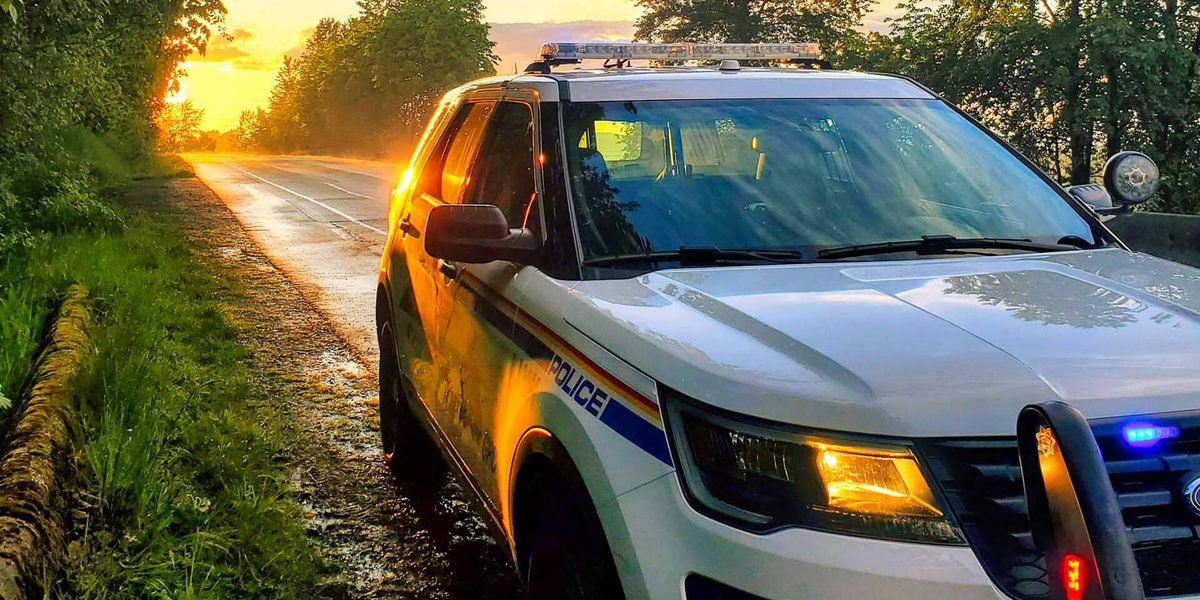
Half past ten on the Friday of Halloween weekend, a car in the ditch on 272 Street near 18 Avenue in Aldergrove, nobody hurt. The Langley RCMP’s write-up, reported in the Advance Times this week, listed what the driver got after a failed breath test: a 90-day Immediate Roadside Prohibition and a 30-day impound, plus the police’s own observation that the impound alone could run past $1,000 once towing, daily storage and administration were added, and that a cab would have been a whole lot cheaper.
We wondered what the full bill really is. It turns out the Province publishes most of it, if you know which pages to open. Here it is, line by line, for a first offence, with the cheaper ways home at the end.
First, what an IRP is (and isn’t)
An Immediate Roadside Prohibition is not a criminal charge. It’s an administrative penalty under BC’s Motor Vehicle Act, served by the officer at the roadside, in force the moment you’re handed the notice. There’s no court. That’s the point of it: the Province built the system so that the consequences land in minutes rather than months.
Since December 2018, federal law lets police demand a breath sample from any driver they’ve lawfully stopped, no suspicion needed. The device reads one of three things. Under 0.05, you’re on your way. “Warn” means 0.05 or more. “Fail” means 0.08 or more. Refusing to blow counts as a Fail. You’re entitled to a second sample on a different device, and the lower of the two results stands.
On a Fail, the officer has a choice: the 90-day IRP, or the criminal route (a 24-hour prohibition, a trip to the detachment for the evidentiary test, a 90-day Administrative Driving Prohibition and a Criminal Code charge). The officer decides which. The criminal route is the one with a minimum $1,000 fine, a record, and a licence suspension of at least a year on conviction.
The ladder
RoadSafetyBC’s own table, last updated October 15, 2026. “Within five years” is how the Warn counts stack.
| Device result | Driving prohibition | Vehicle impound | Towing and storage (minimum) | Penalty | Reinstatement fee | Province’s total |
|---|---|---|---|---|---|---|
| Warn, 1st | 3 days | 3 days (police may) | $150+ | $200 | $250 | $600 |
| Warn, 2nd in 5 years | 7 days | 7 days (police may) | $230+ | $300 | $250 | $780 |
| Warn, 3rd in 5 years | 30 days | 30 days (police must) | $680+ | $400 | $250 | $1,330 |
| Fail or refusal | 90 days | 30 days (police must) | $680+ | $500 | $250 | $1,430 |
Those totals come with three footnotes on the Province’s page: they don’t include tax, they don’t include the remedial programs, and they don’t include insurance. So $1,430 is where the real bill starts, not where it ends.
The 90-day bill, line by line
The penalty: $500. Due within 30 days of the notice. The Act caps it at $500.
Getting your licence back: $250 plus $31. When the 90 days are up, you don’t simply start driving again. You pay every outstanding fine and debt, book an appointment at an ICBC driver licensing office, and pay the $250 reinstatement fee plus a $31 short-term licence fee.
The car: $680 at the very least. This is the line the RCMP post was warning about. The 30-day impound is mandatory on a Fail, and the registered owner pays the tow and the storage even if someone else was driving (the Province’s page suggests suing the driver in small claims if that’s your situation). The day of the tow doesn’t count, and day one starts at midnight, so a 30-day impound is normally 32 days of storage charges. The regulated rates for RoadSafetyBC impounds, for a car under 3,000 kg: a $110 flat tow plus $3.32 a kilometre and a 25 per cent fuel surcharge, storage of up to $40 a day depending on the zone, and an administrative fee of $55.05 when you claim the car. At the top storage rate, 32 days is $1,280 before the tow. The “$680+” in the table is a floor; the plus sign is doing a lot of work.
Two more things about the car. You can ask for a review of a 30-day impound (apply within 15 days, per RoadSafetyBC), but towing and storage are yours to pay whatever the outcome. And if nobody claims the car, it can be sold, with any shortfall attached to the owner’s licence as a debt that blocks renewals.
The course: $1,200. The Responsible Driver Program is required for every driver whose 90-day prohibition involved alcohol or drugs, and the Province’s plain-language guide says it cannot be appealed. The $1,200 is due at registration with the program’s provider, within 45 days of the referral letter, or your licence is cancelled. It’s a telephone assessment, then an 8-hour or 16-hour workshop depending on the assessment, then a one-on-one follow-up six months later; the whole thing can take up to 11 months. There is a payment plan ($505, then $150, $450 and $95) and a reduced fee of $852.50 for people on income or disability assistance, capped at five per cent of participants a month.
The interlock: not usually, the first time. RoadSafetyBC runs a points system for its remedial programs. A 90-day IRP is 6 points, and 6 to 8 points means the course but no interlock. A second alcohol prohibition within five years pushes you past 9 points, and then the Ignition Interlock Program kicks in: a $150 administration fee, free installation, and a device rental of $115 a month plus tax (a little under $130) for at least six months, in every vehicle you drive.
Insurance: it depends. ICBC charges a Driver Risk Premium for two or more roadside prohibitions in three years (it starts at $453 a year), or for any Criminal Code driving conviction ($1,108 a year for the first). One IRP on its own doesn’t trigger it. ICBC does say that serious or frequent convictions can affect what you pay for collision and extended liability coverage.
Add it up. On the Province’s numbers alone, a first 90-day IRP is $500 + $250 + $31 + $1,200 = $1,981 before the tow truck and the storage yard. With a realistic 32-day storage bill, it is comfortably past $3,000. That’s for a night when nobody got hurt and no charge was laid.
The seven-day clock
You have seven days from the notice to apply for a review, pay the fee and book the date, all three. The fee is $100 for a written review or $200 for an oral one on a 30- or 90-day prohibition, on top of the penalty itself. Written submissions are capped at 30 pages and evidence has to be in 48 hours before the review. As of late October the Province says its online application is temporarily unavailable, so applications go in at an ICBC driver licensing office or a Service BC centre. The grounds are limited and are set out on the application page; a review is about whether the prohibition was properly issued, not about whether you’re sorry.
Driving anyway
The one thing worse than the bill is ignoring it. Driving while prohibited is a separate offence with a minimum $500 fine for a first offence, a further 12-month prohibition, possible jail, and a mandatory jail term on a second offence. The car you’re caught in gets impounded even if it isn’t yours.
Getting home from a Langley night out instead
This is the part that matters more than the arithmetic. Langley is spread out, and the honest answer is that the options thin out after midnight. They don’t vanish, though.
The bus. The 502 between Langley Centre and Surrey Central is the workhorse: it keeps running after midnight most nights, but the Sunday and holiday schedule finishes earlier. The 503 is the only route through to Aldergrove, and its last trip of the night leaves Langley Centre before midnight every day of the week. The N19 NightBus does not come to Langley; it turns around at Surrey Central, so a late night in Vancouver means the N19 to Surrey Central and the 502 from there. All of this is in TransLink’s September 2026 Surrey and Langley timetable (linked below); check the last trip before you go out, not after, and our transit page has the exchanges and fares.
A taxi. Pacific Cabs runs 24 hours with GPS dispatch and metered fares, with a dedicated Langley and Aldergrove line (604-533-3333) and a Fort Langley line (604-882-2111). Yellow Top Taxi also advertises 24/7 service in Langley (778-480-8008). Both numbers are from the companies’ own sites; save one in your phone before the first drink, because the ride is a two-figure bill against the four-figure one above.
Ride-hailing. Both Uber and Lyft list Langley as a service area. Availability late on a weeknight is the question, so open the app before you decide to drive.
Leave the car. Ask the staff when you arrive whether the lot allows an overnight stay. A car collected the next morning costs nothing; the same car collected from an impound lot a month later costs more than a used set of winter tires.
The Province’s pages and the Act are linked in the sources. The Langley RCMP’s own line on the Aldergrove night was shorter than ours: plan ahead.