Why there are medical students at the Langley seniors' centre, and what 'community-engaged' actually means
SFU's new medical school sends its first-year students into community organisations, not just hospitals. The Langley Senior Resources Society is one of the first. Here is how the school is built, why Langley is in its territory, and what the placements do and don't involve.
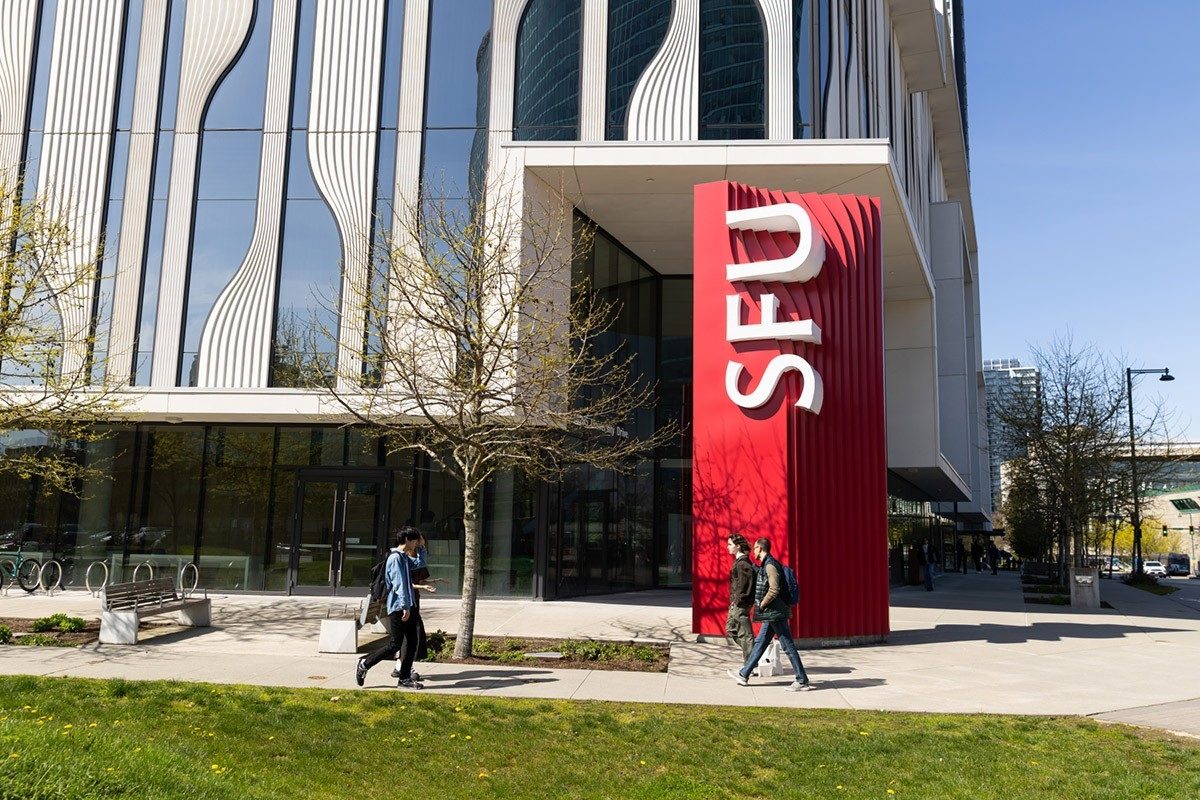
- The school
- SFU Stephens Family School of Medicine, SFU Surrey campus. First class of 48 started August 5, 2026; 64 seats for 2027, 120 a year by 2035
- In Langley
- Two to four students a month, on Thursdays, at the Langley Senior Resources Society's centre (20605 51B Ave) and its Adult Day Program (20256 56 Ave), since mid-September and planned through the end of 2027
- What they do there
- Non-clinical service alongside members, then structured reflection. They are not examining or treating anyone
Once a month, a few first-year medical students spend a Thursday at the Langley seniors’ centre. They aren’t there to take blood pressure. The Langley Senior Resources Society (LSRS) and SFU’s new medical school announced the arrangement at the end of October, and the words they used, “community-engaged learning,” are the school’s whole design philosophy. This is what it means in practice, for the students and for the people they meet.
A medical school built for the Fraser Valley
The Stephens Family School of Medicine is the first entirely new medical school in Western Canada in more than half a century. Its first 48 students started a month-long orientation on August 5, 2026 at SFU’s Surrey campus, in the Central City building beside Surrey Central SkyTrain station. The intake grows to 64 next year and is planned to reach 120 a year by 2035. A permanent building, Centre Block in Surrey City Centre, is due to open in fall 2030; the Province is paying $496 million of it, with SFU adding $25 million, plus $41.1 million a year to run the school.
The Province’s stated reason for building it is more family doctors, close to home, south of the Fraser. The school’s mission statement talks about strengthening primary care and serving communities that are underserved, and its founding dean, Dr. David Price, has put it as training doctors “in the community, with the community, and for the community,” on the theory that students who train near home are more likely to stay.
Three things make it different from the UBC program most BC doctors came through:
- Three years, year-round, instead of the usual four. The first residencies could start as early as 2029.
- Longitudinal learning from the second month. Rather than blocks of hospital rotations, each student is attached to the same family practice every week for all three years, somewhere in the Fraser Health region, which means travelling between cities. Hospital time comes in years two and three. The school’s partners are Fraser Health, the First Nations Health Authority and the Divisions of Family Practice, the local groups of family doctors; Langley has its own Division.
- Community-engaged learning. The curriculum page defines it as students learning from and alongside community organisations and leaders, through service and guided observation, to understand a community’s strengths and its health problems before they see them as diagnoses. The school’s phrase for the intent is “a strength-based, wholistic understanding of health rooted in community relationships.” The cases students study are written to reflect the Fraser Valley’s population, with input from Indigenous Elders, knowledge holders and physicians.
What the Langley placement looks like
The LSRS placement is that third strand. According to the Langley Advance Times, two to four students have come since mid-September to the society’s recreation and resource centre on 51B Avenue and to its Adult Day Program on 56 Avenue, which Fraser Health lists as the Langley day program for older adults with physical or cognitive limitations. They take part in what the school calls non-clinical service activities with members, then work through structured reflections that tie the day back to curriculum goals, professional ethics and how the health system works. LSRS provides the orientation, supervision and feedback; the school handles program design and which students go where. Sessions are once a month on Thursdays, planned through the end of 2027.
Dr. Keyna Bracken, the school’s associate dean of undergraduate medical education, called it reciprocal, community-rooted learning that gives students an understanding of aging and community health “that simply can’t be taught in a classroom.” Kate Ludlam, the society’s executive director, described it as a two-way exchange and a chance for members to help shape the next generation of physicians.
What it means for Langley
For members at LSRS, it means seeing the same handful of students over months rather than a one-off visit, and being treated as the people the students are learning from rather than practice patients. For the city, it is the first visible piece of the school’s footprint east of Surrey: the school’s own pages don’t yet name Langley Memorial Hospital or any Langley clinic as a training site, only “the Fraser Health region,” so the weekly family-practice attachments may or may not land in Langley offices. If they do, the Langley Division of Family Practice already runs a learning network for the doctors who take students.
The longer bet is the one the Province is making: that a doctor who spent three years in Fraser Valley clinics, a seniors’ centre and a day program is more likely to set up practice here than one who trained in a downtown teaching hospital. The first class graduates in 2029. We’ll know by the early 2030s whether it worked.
More on the society, its programs and membership: Langley Senior Resources Society. For care, housing and support options for older adults, see our guide for seniors in Langley.