- Route
- McMillan Island, just across Bedford Channel from Fort Langley village, to Albion in Maple Ridge
- Ran
- June 1957 to July 31, 2009
- Boats
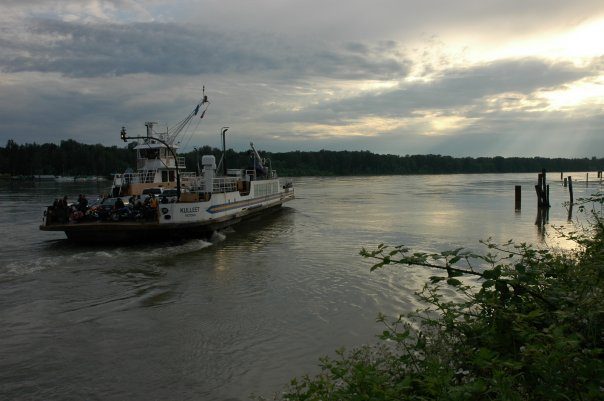
- T'Lagunna at the start; Klatawa and Kulleet in the later years
- Fare
- Tolled until 1972, free after that
- Replaced by
- The Golden Ears Bridge, open to traffic June 16, 2009
- Today
- The old landing on McMillan Island is on Kwantlen First Nation land and is not a public viewpoint
- Last checked
- October 25, 2026
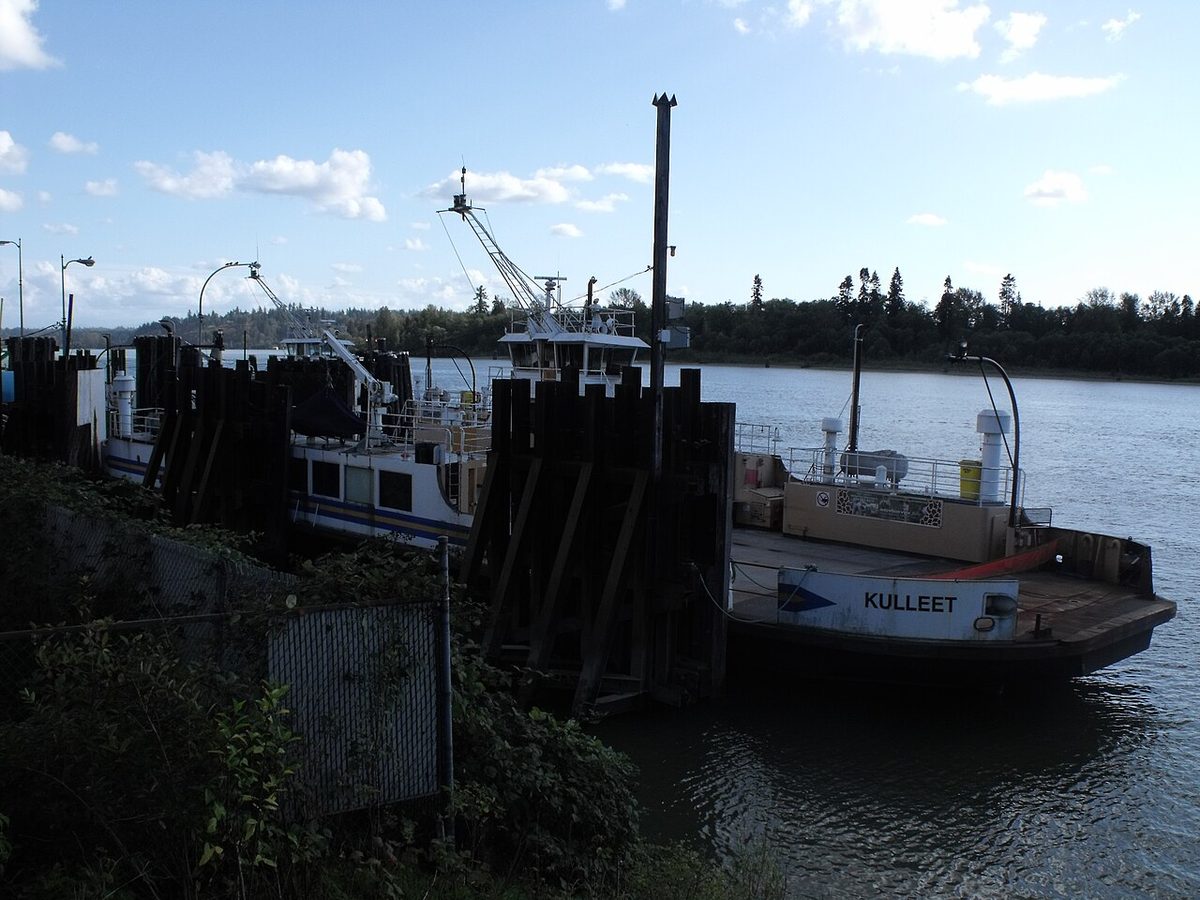
At noon on July 31, 2009, Klatawa and Kulleet made their last public trips across the Fraser. TransLink’s account of the day has passengers cheering and drivers leaning on their horns on the way over to Langley. Then Kulleet went back to Maple Ridge one more time, carrying the ferry crews and transit staff, and that was it. Fifty-two years of “are we going to make this sailing?” were over.
Most of us remember the line-up. The story behind it is better than that.
People were crossing here long before cars
The river was a road before there was a ferry. The Township’s history of the Kwantlen people describes family travel, fishing and trade up and down the Fraser, with big gatherings along the river to fish and trade. After settlers arrived, the crossing between Fort Langley and Maple Ridge was done by rowboat and canoe. The Maple Ridge Museum tells of the first teacher at Maple Ridge School, whose job included rowing across to pick up the children from the far bank.
Thirty-three years of asking
Langley asked for a ferry in 1924, with Maple Ridge council backing the idea. It was approved, then stalled over signatures and the landings. More promises came in 1936 and 1941. Neither produced a boat.
The Langley side had been getting ready the whole time. When Fort Langley butcher Jacob Haldi died, his will left $15,000 toward a bridge to Brae and McMillan islands, on the condition that a ferry ran between Fort Langley and Maple Ridge. The first Haldi Bridge went up in 1931 and 1932. It was replaced in 1957, ahead of the heavier traffic a car ferry would bring.
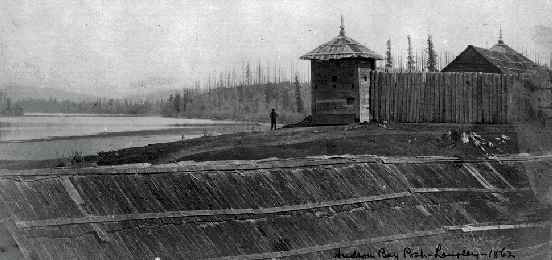
A newspaper photo in the Township’s collection, dated October 25, 1956, shows the old wharf on McMillan Island waiting to be replaced. The caption says it had been built about 30 years earlier, back when a ferry was first being talked about. So the dock beat the ferry by a generation.
Opening day, June 1957
The ferry finally started in June 1957. The records don’t agree on the exact day: Hansard says the first sailing was June 2, the Township’s aerial photo of the opening is dated June 3, and TransLink’s farewell post says June 7. They may be marking different things. What isn’t in doubt is that it was a party. The aerial shows crowds and cars packed onto McMillan Island, and the Township archives still hold the list of stops on the official opening cavalcade.
The first boat wasn’t new. T’Lagunna was built in 1931 by Burrard Drydock in North Vancouver and had already worked the Agassiz to Rosedale crossing before it came downriver.
When it cost money, and when it got busy
The ferry wasn’t always free. The Pitt Meadows Museum keeps a booklet of Albion Ferry tickets, and tolls came off in 1972.
Free meant busier. In a June 1975 debate in Victoria, Highways Minister Graham Lea said the end of tolls had pushed demand up. MLA G. Scott Wallace passed along complaints about long waits, the ramps and docking. Lea agreed there were problems and said he would get a report. So the Albion line-up was already a political topic 30-plus years before the bridge.
The little ferry with a world first
This is the part that surprises people. Klatawa was converted to run on compressed natural gas and diesel in 1985, and Kulleet followed in 1988. Those dates come from the firm that designed the conversions and are repeated in a 2010 Danish government report on gas-powered ships. TransLink described Klatawa as the world’s first passenger ferry converted to run on natural gas and diesel.
The designers reported fuel and maintenance savings and about 45 per cent less nitrogen oxide from the exhaust. That’s a smog figure, not a greenhouse-gas one, but it’s still a neat claim for a ferry most of us only knew from the wait.
A real commute
The ferry wasn’t just for Sunday drives. In February 2007 TransLink counted about 3,800 vehicles, 40 bikes and 450 walk-on passengers a day, heading to work, running errands and going up to Golden Ears Park. A 1983 photo in Kwantlen Polytechnic University’s archives notes that staff used it to commute. In the legislature in 2009, MLA Michael Sather put 2006 at 1.5 million vehicle trips and more than four million passenger trips.
The river still had the final say. On December 16, 2008, ice built up against the docks and TransLink shut the service down because the boats couldn’t land safely. Its notice reminded walk-on riders who’d left a car on the other side that they’d need another way to go and get it.
The bridge, and the people who wanted to keep the boats
The Golden Ears Bridge opened to traffic on June 16, 2009: six lanes, sidewalks for walking and cycling, and a new express bus. TransLink said it would cut 20 to 30 minutes off trips between Maple Ridge or Pitt Meadows and Langley or Surrey.
Not everyone wanted the ferry gone. On February 23, 2009, Sather presented a petition from 616 people asking to keep it. In March he raised a proposal from the ferry captains to carry on with one boat, and fellow MLA Randy Hawes pointed to questions about cost and local support. The ferry and the bridge ran side by side for about six weeks before the last sailing. TransLink set up a two-year transition program for the ferry staff, who moved to the SeaBus, retired or went on to other jobs.
For the Kwantlen families who live along the road to the old landing, the end of the ferry meant something else. The Langley Advance Times reported in January 2020 that the speed and volume of ferry traffic had made it hard to get in and out of their own driveways, and that people had looked forward to quieter days after it closed.
What happened to the boats
They were sold together to Tidal Towing of Port Coquitlam for $400,000, the Langley Advance reported in January 2012. TransLink’s own report says the deal was finalized in December 2011 and ownership changed hands in January 2012, which is why you’ll see both years quoted.
The empty dock had a rough patch afterwards. The same 2020 story quoted Kwantlen members about parties, dumping, fires and trespassing there. That’s a good reason to leave the old landing alone: it’s on Kwantlen land, not a park, and it isn’t set up for visitors.
Where to go to remember it
The best places to see the ferry now are the archives. The Township’s collections at salishan Place by the River hold the 1956 wharf photo, the 1957 opening aerial and the cavalcade list. The Pitt Meadows Museum has the ticket booklet, and TransLink’s Buzzer blog still has the photos and video from the last day.
For the river itself, walk the waterfront in Fort Langley village or the trails at Brae Island Regional Park, and look across the channel toward McMillan Island. You can also read more about the Kwantlen First Nation and the wider history of Langley.
Rode the Albion ferry, or worked on it? We’d love to hear your stories, with your OK to share them. Send them in.
Last checked October 24, 2026. Spotted something out of date? Tell us.