- What
- The British Columbia Electric Railway's Fraser Valley line, New Westminster to Chilliwack, known as the Chilliwack Line or simply "the Interurban"
- In Langley
- 1910 to 1950 for passengers; nine stations in the Township, including Langley Prairie (today's Langley City), Milner, Sperling and Coghlan
- Today
- Still a working freight line, run by Southern Railway of BC
- See it
- The 1910 Coghlan substation on 256 Street (from the road), Milner, Sperling, and restored car 1225 in Cloverdale (FVHRS; 2027 season starts in May)
- Last checked
- November 19, 2026
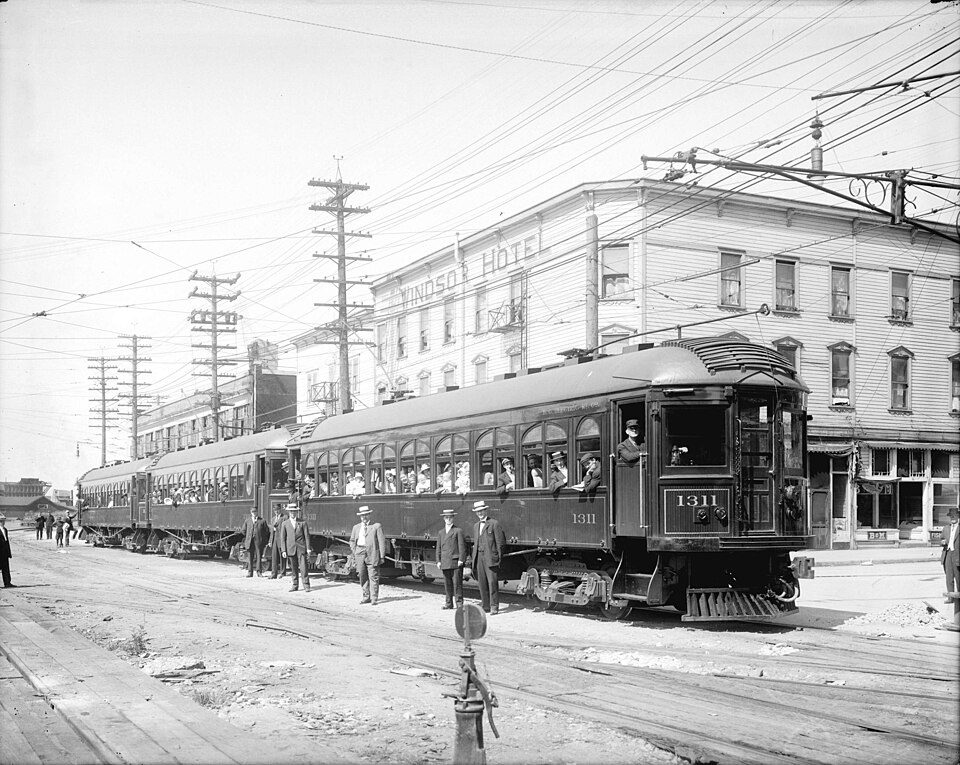
On the last day of passenger service in 1950, two interurban trains set out, one from Vancouver and one from Chilliwack, and met in Langley. The cars pulled up nose to nose to mark the end of forty years of electric passenger trains through the Fraser Valley. Someone filmed it, along with a few earlier runs from 1948 and 1949, and decades later the Langley Heritage Society posted the footage online as Chilliwack and Fraser Valley Way Points. It shows Langley’s farms, cars and buildings around 1950 from the train window.
The Langley interurban was the BC Electric Railway’s line from New Westminster to Chilliwack. It reached Langley in 1910, carried passengers until September 30, 1950, and still carries freight. The Township’s own history counts nine stations within Langley. More than any road of its day, it decided where Langley’s villages grew.
Langley interurban timeline
- 1904 The Fraser River rail bridge opens at New Westminster on July 23, opening the way for an electric line along the south side of the river.
- 1907 On August 26, BC Electric officials and Surrey's reeve turn the first sod on the Old Yale Road in Surrey. The line's formal name is the New Westminster–Chilliwack Railway.
- 1908–1909 Construction starts in December 1908. Brothers Henry and Nathaniel Coghlan cut more than 20,000 railway ties for it, and by fall 1909 the track is going down and the wires are going up.
- 1910 Milk trains start on May 4. The line reaches Langley Prairie, Milner gets a station, a warehouse and the only freight yard between Cloverdale and Clayburn, and the Langley substation goes up beside the tracks at Coghlan. Regular service to Chilliwack begins in October.
- 1911–1912 Langley Prairie gets its own post office (May 16, 1911). A church opens at Sperling in 1912, a year after the flag station gave the place its name.
- 1920s–1930s The Fraser Highway is built in the 1920s and the Pattullo Bridge opens in 1937. The Township's history says both pulled business toward cars and trucks and hastened the railway's decline.
- 1939 The last milk train runs on January 18; local dairies and trucks take over.
- 1950 Passenger service ends on September 30. Freight keeps running.
- 1955 Langley Prairie, the town that grew up where the Interurban crossed the Yale Road, becomes the City of Langley.
- 1960s–1988 The line passes to the new BC Hydro in the early 1960s. In 1988 the rail division is sold, and Southern Railway of BC has run freight on it since.
- 2001–2005 The Fraser Valley Heritage Railway Society is incorporated in Surrey (March 15, 2001) and in August 2005 brings interurban car 1225 home from a museum in California.
- 2013–2015 The Township adds the Langley (Coghlan) substation to its Community Heritage Register in October 2013, and unveils an interpretive sign there on November 24, 2015.
- 2029 SkyTrain is due to reach Langley City Centre.
Why it mattered to Langley
Langley’s other early railways, the Great Northern and the Canadian Northern, had only a couple of stops each here, and the Township’s history says neither did much for local traffic. The interurban was different. It stopped often, hauled milk, butter and root crops from family farms to city markets, and brought land buyers, developers and would-be settlers out to look at Langley.
It also explains why Langley’s commercial centre is where it is. In a 70th-anniversary article for the City, historian Warren Sommer writes that the railway reached Langley in 1910, and that of all the Langley settlements hoping for a line, only Langley Prairie had the kind of service the surrounding farms needed. The Timms family saw an opening where the Interurban crossed today’s Fraser Highway, Glover Road and 56 Avenue, and built a theatre, a café, a business block and a hotel along the Yale Road. The rest of downtown Langley grew out from there.
Stations in Langley
The Township’s history counts nine stations in Langley. Along the line most stops were simple open-sided shelters, with a few proper station buildings. These are the Langley stops the Township, the Heritage Society and the museum’s heritage files name:
- Langley Prairie. Where the line crossed the Yale Road (Fraser Highway) and Glover Road, at the old Innes Corners. This is downtown Langley City today, and the tracks still cut through it.
- Milner. The showpiece. The station and warehouse stood on land donated by Francis Worrell, where the Otter Co-op feed mill is now, and the station agent lived on site. A 1910 New Westminster newspaper, quoted in the Township’s history, called it one of the finest and largest station houses on the line. Milk from local dairies went out from here to the Fraser Valley Dairy in Burnaby, and the church picnic hired whole passenger cars for a day in Stanley Park.
- Jardine. The spot where Glover Road crossed the line, briefly home to a cheese factory.
- Sperling. A flag station from 1910. The area had been called Harmsworth, but the railway needed a name for its timetable and picked its general manager’s, R. H. Sperling.
- Coghlan. Named for the Coghlan brothers and their 20,000 ties, and home to the big substation.
- Jackman. A stop in northeast Langley, toward Glen Valley; 272 Street was once Jackman Road.
What’s left to see today
The Coghlan substation
The best piece of the Interurban left in Langley is the BCER Langley Substation on 256 Street, also known as the Coghlan substation. Built in 1910 to a design by architect Henry B. Watson, it’s a four-storey concrete building in a Classical Revival style, which makes it look rather grand for a farm field. It fed 600 volts of direct current to the trains halfway along the stretch between Cloverdale and Clayburn, and from the start also sold power to Langley, Milner and Fort Langley. It was one of five substations on the line; only two still stand, this one and Sumas in Abbotsford.
It’s privately owned and lived in. Look from the road: the Township’s large interpretive sign was designed so drivers can pull over and read it without leaving the car.
Milner
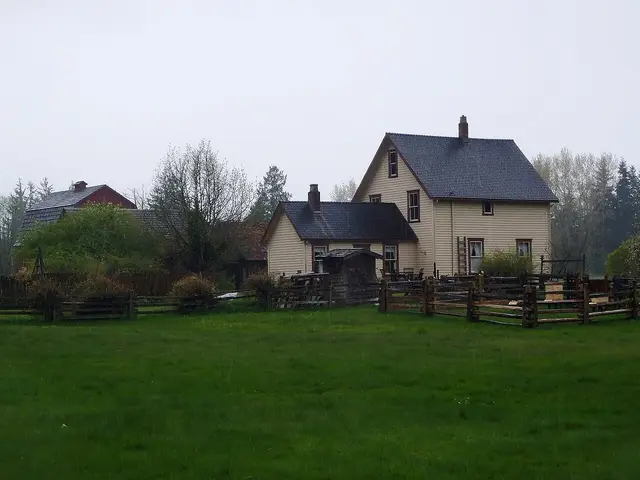
Milner was the busiest village on Langley’s stretch of the line. The Heritage Society’s timeline puts the old station site where the Otter Co-op feed mill stands. Milner Chapel in Milner Park predates the railway, and the Society looks after houses nearby, including Dixon, Lattimer and Moir, from the farming boom that came with it (see our Langley Heritage Society page). They’re occupied homes, so it’s a drive-by.
Sperling Church
Sperling Methodist Church was built in 1912 just down the tracks from the flag station, and served the community until 1969. The Township owns it and the Langley Heritage Society saved it from vandalism and restored it; today a caretaker lives in it, so admire it from the road.
The tracks themselves
The rails are still in use. Southern Railway of BC hauls freight on the old interurban line, which runs through downtown Langley City and on through Milner and the farmland beyond. In Langley City, some trails near Brydon Lagoon follow the old interurban route.
Ride an interurban car in Cloverdale
To ride a real BC Electric interurban, go to the Fraser Valley Heritage Railway Society in Cloverdale, just over the Surrey line. Its flagship is car 1225, which worked in Vancouver, Steveston and Burnaby from 1913 to 1958, spent about 50 years at a California museum, and came home in 2005. Trains leave Cloverdale Station at Highway 10 and 176A Street and run on the original BCER route through the farmland to Sullivan Station and back, about 55 minutes on the Sunday Sullivan Excursion.
The 2026 regular season has ended, and the December Electric Express Christmas rides are sold out. The society says the 2027 season starts in May.
From interurban to SkyTrain
Rapid transit is coming back to Langley, though not on the old tracks. The Surrey Langley SkyTrain, renamed the Dave Barrett Extension in September 2026, runs 16 kilometres along the Fraser Highway corridor from King George Station in Surrey to Langley City Centre, with eight new stations. The Province says guideway construction was about 65 per cent done in September 2026 and the line is set to open in 2029. As the City’s anniversary article puts it, the last station will sit on land that was once the Innes farm, where Langley Prairie began beside the Interurban.
There’s a link with the old system, too: when SkyTrain’s first line opened, it ran along one of BC Electric’s former interurban routes.
For the rest of Langley’s story, see our history of Langley and the Langley heritage sites you can visit.
Something out of date? Tell us.
Last checked November 18, 2026. Spotted something out of date? Tell us.