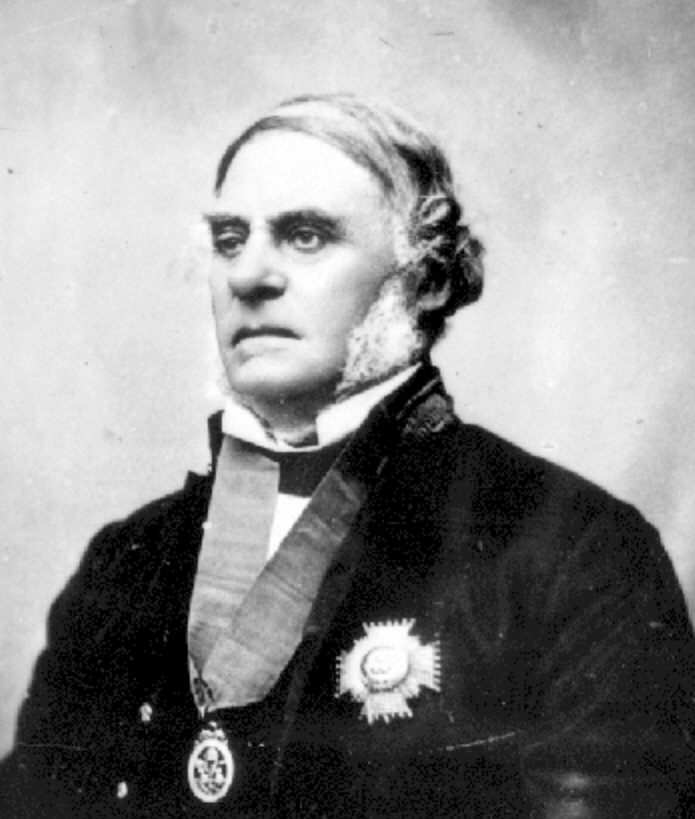
- Born
- 1803 (the Dictionary of Canadian Biography gives June 5 or August 15), in British Guiana
- Died
- August 2, 1877, Victoria
- Known for
- Hudson's Bay Company chief factor; governor of Vancouver Island (from 1851) and of the mainland Colony of British Columbia (1858 to 1864)
- Langley connection
- Took his oath as governor at Fort Langley on November 19, 1858; the colony was proclaimed there the same day
- Where to see it
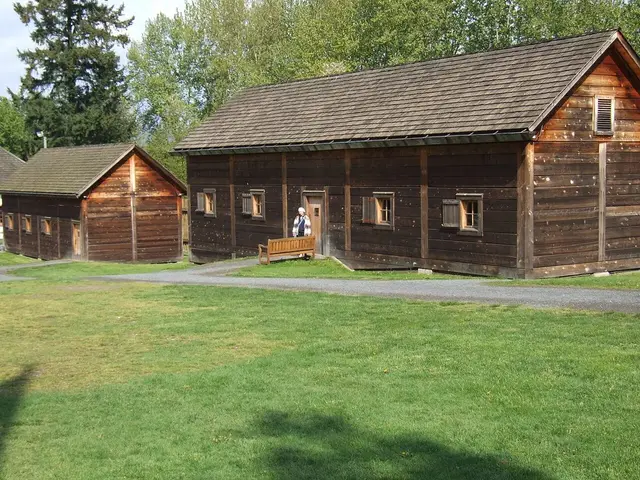
- Fort Langley National Historic Site: the rebuilt Big House and the statue at the entrance
- Last checked
- October 23, 2026
A colony was born in a log house at a fur-trade post. On November 19, 1858, a few officials gathered in the Big House at Fort Langley and made British Columbia official, and the man at the centre of it was James Douglas. It’s why the Township still calls the village the Birthplace of BC.
This page is about Douglas and Langley specifically. He had a long career elsewhere, mostly in Victoria, and the Dictionary of Canadian Biography covers all of it.
Who he was
Douglas was born in British Guiana in 1803. His father, John Douglas, was a Glasgow merchant with sugar interests there; the Dictionary of Canadian Biography says his mother was a “Creole” woman, possibly a Miss Ritchie. At 16 he was apprenticed to the North West Company. When that company merged into the Hudson’s Bay Company in 1821, he went with it.
In 1828 he married Amelia Connolly, daughter of HBC chief factor William Connolly, “according to the custom of the country”; a church ceremony followed in 1837. The biography describes her as of mixed Indigenous and European parentage, and the Langley Heritage Society calls her Métis. He rose fast: chief trader in 1835, chief factor in 1839, builder of Fort Victoria in 1843, and governor of the colony of Vancouver Island from 1851.
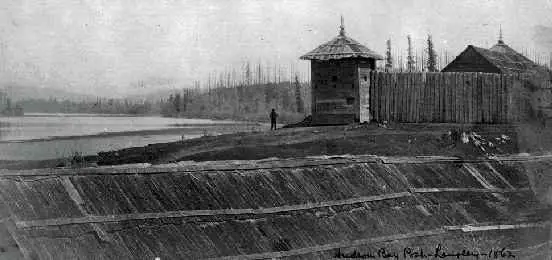
Fort Langley mattered to him well before 1858. The biography notes that after the 1846 border treaty the company reorganised its inland brigade routes to converge on Fort Langley.
November 19, 1858
Gold on the Fraser changed everything that spring. Miners poured upriver past the fort; Douglas’s biography says more than 10,000 men were panning between Fort Langley and Fort Yale that year. Britain moved to turn the mainland, until then run as HBC territory, into a Crown colony. The act creating the Colony of British Columbia took effect on August 2, 1858, and Douglas was named its governor while keeping the Vancouver Island job.
He came to Fort Langley to make it official. In the Big House, the managers’ residence inside the palisade, the new judge, Matthew Baillie Begbie, gave Douglas his oath as governor, and Douglas swore Begbie in as judge. Begbie’s biography says simply that the two men “swore each other into office.” Douglas then proclaimed the act that created the colony. The Langley Heritage Society’s walking tour marks the spot.
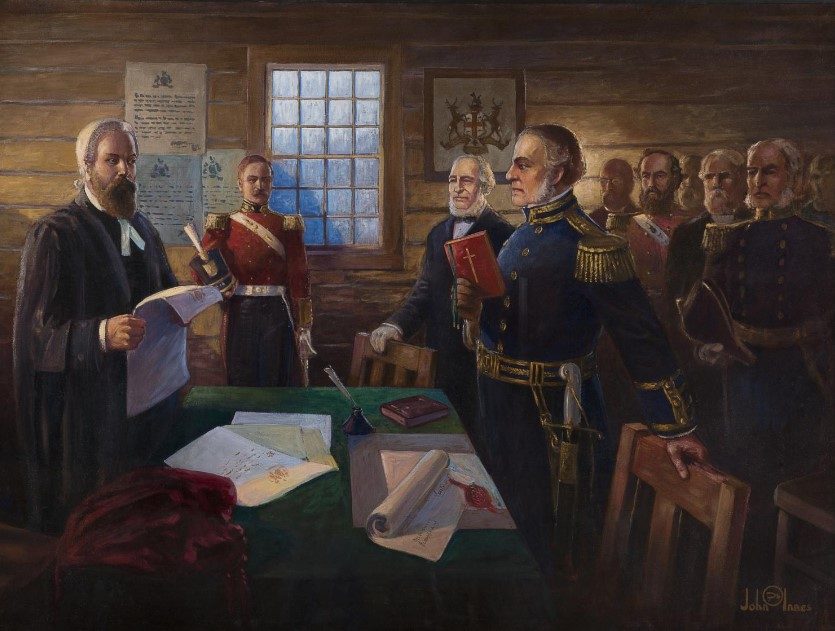
The Big House you can walk through today is a reconstruction, built in 1958 for BC’s centennial.
The capital that wasn’t
For a few months, Langley looked set to be more than a birthplace. BC Geographical Names records that Douglas picked the site beside the first fort, at Derby, as the colony’s capital and announced it at Fort Yale on September 15, 1858. The Royal Engineers started building. Then Colonel Richard Moody arrived in December, didn’t like the low riverbank site, and the capital went to New Westminster instead. Derby faded. Our Derby Reach page has the trail that runs past where it stood.
One more Langley mark: the Township’s heritage study says Douglas issued the colony’s first pre-emption proclamation on February 4, 1859, letting settlers claim land and pay for it over time. The first man to pre-empt land in Langley, Kenneth Morrison, did so just upriver from the fort. That’s the start of the farm Township that followed.
How he’s remembered now
A large statue of Douglas stands at the entrance to the national historic site. For decades the shorthand was “Father of BC.” That’s changed.
In 2020 Parks Canada’s manager for national historic sites on the coast, Kate Humble, told the Abbotsford News that the agency no longer uses the “Father of BC” label, that the way commemorated figures are interpreted “can and must evolve over time,” and that the statue reflects the era when it was made and installed. Parks Canada also worked with the Canadian Guyanese Cultural Association of BC on telling the story of Douglas’s own mixed heritage, and opened a Métis exhibit in the Big House in 2019.
The Kwantlen perspective is the one most often missing from older plaques. The fort was built in Kwantlen territory, and Kwantlen families moved beside it to trade. In a CBC story on how Douglas should be remembered, Kwantlen artist Brandon Gabriel, a former historical researcher for Kwantlen First Nation, described Douglas as a “beachhead” for colonization, said the Kwantlen were on the river long before him, and argued that Indigenous peoples were not given equal standing when the province was formed. The same story quotes historian Jean Barman, who credits Douglas with negotiating land agreements with First Nations on Vancouver Island but calls his record mixed.
The Township’s own heritage study is blunt about what came after 1858: as colonial settlement grew, governments pushed First Nations onto small reserves to open land for settlers. Douglas’s biography describes his reserve policy as “benevolent paternalism,” with title kept by the Crown.
Langley City got into this conversation too. In 2020 council asked staff to work with the BC Black History Awareness Society and Kwantlen First Nation on a plaque or interpretive sign in the City’s Douglas Park, and council widened that to include the Katzie, Matsqui and Semiahmoo First Nations. The councillor who moved it, Nathan Pachal, said it would not go ahead without local First Nations’ support. We haven’t found confirmation that a sign was installed; if you know, tell us.
Douglas Day
The fort still marks November 19. The Aldergrove Star has covered anniversary events at the site that celebrated his multicultural background with Black, Scottish, Métis and First Nations arts, food, music and dance, and in November 2023 the Langley Heritage Society’s anniversary dinner featured University of the Fraser Valley historian Scott Sheffield. Check Parks Canada’s events page for this year’s plans.
Related pages
- People who shaped Langley
- Fort Langley National Historic Site
- The history of Langley
- Kwantlen First Nation
Something out of date? Tell us.
Last checked October 22, 2026. Spotted something out of date? Tell us.