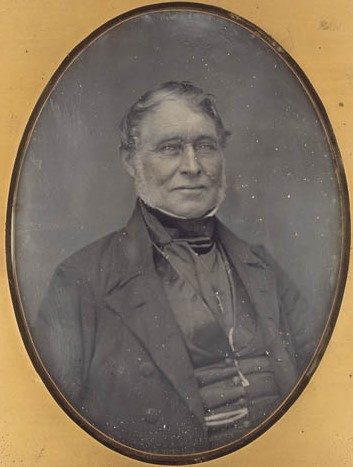
- Born
- About 1798, Lachine, Lower Canada
- Died
- May 7, 1871, Saanich, near Victoria
- At Fort Langley
- In charge from 1833 until he retired in May 1859
- Nickname
- "Little Yale," for his height
- Named after him
- Fort Yale (1848), and so the town of Yale in the Fraser Canyon
- Last checked
- October 23, 2026
If one person ran Fort Langley, it was James Murray Yale. McMillan founded it and McDonald got it fishing, but Yale was in charge for a quarter of a century, through a move, a fire, a farm, the border settlement and the gold rush. When the colony was proclaimed in his fort in 1858, he’d been there 25 years.
Before Langley
Yale was born at Lachine, near Montreal, around 1798, and joined the Hudson’s Bay Company in 1815. The early years were rough: in 1817, during the fur-trade war with the rival North West Company, NWC men seized him and held him at Great Slave Lake until the fall. He then served at posts in what is now northern BC, and in 1828 travelled with Governor George Simpson down the Fraser, running its main canyon. That trip passed Fort Langley, where he’d spend most of his working life.
Running the fort
He took over in 1833. What happened next, according to the Dictionary of Canadian Biography and the Township’s heritage study:
- The farm. The company started a farm on Langley Prairie in 1833, and Yale built it into the largest on the mainland of what’s now BC: grain, potatoes, vegetables and, from 1839, dairy cattle. The Township’s study puts it at 2,000 acres southeast of the fort, near today’s Milner, and calls it the first recorded dairy farm in BC. Much of the produce went north under an 1839 deal to supply the Russian American Company in Alaska.
- The move. The first fort at Derby flooded and was far from the farm, so in 1839 Yale moved it about four kilometres upstream to where it stands now.
- The fire. On April 11, 1840, the new fort burned. Yale rebuilt it, the second time in about a year he’d had to build a fort from the ground up. Ovid Allard, a company man who would later run the farm and serve as Langley’s postmaster, helped with the rebuilding.
- Salmon. Yale was one of the first to salt fish on the Fraser, soon after 1830. By 1850 the fort packed about 2,000 barrels a year. Parks Canada credits the Kwantlen, and chief Whattlekainum in particular, with pushing the company to trade in salmon and cranberries, and the barrels went as far as Hawaii.
- Trade. Parks Canada’s site guide says Yale paid good prices at the trade window to keep Indigenous traders from taking their business to the Americans.
He was made chief trader in 1844. When the 1846 border treaty cut the company off from the Columbia, Fort Langley became the depot for the brigades heading inland, and in 1848 the new post up the canyon was named Fort Yale after him.
Family and Kwantlen ties
Yale had three daughters, the Dictionary of Canadian Biography says, and one married a son of Sir George Simpson. Wikipedia, citing historian Keith Thor Carlson’s work on exchange at Fort Langley, says Yale’s first marriage was to a Kwantlen woman, Quaitlin, the daughter of a Kwantlen chief, and that he married twice more later. We haven’t found a primary source that names her, so we’re reporting it as that article does.
What Parks Canada does say is that the company encouraged its men to marry Indigenous women, and that those marriages gave the company access to trade networks and gave Indigenous families priority access to goods. At Fort Langley, many of the families inside the palisade were these mixed households; the site’s Servants’ Quarters and Kitchen Shelter tell the stories of two of them.
1858 and after
The gold rush filled the fort with miners in the spring of 1858, and on November 19 the colony was proclaimed in its Big House (see James Douglas at Fort Langley). Yale retired the next May, after the capital plan for Derby had been dropped in favour of New Westminster. He settled on Stromness Farm in Saanich and died there on May 7, 1871.
See it
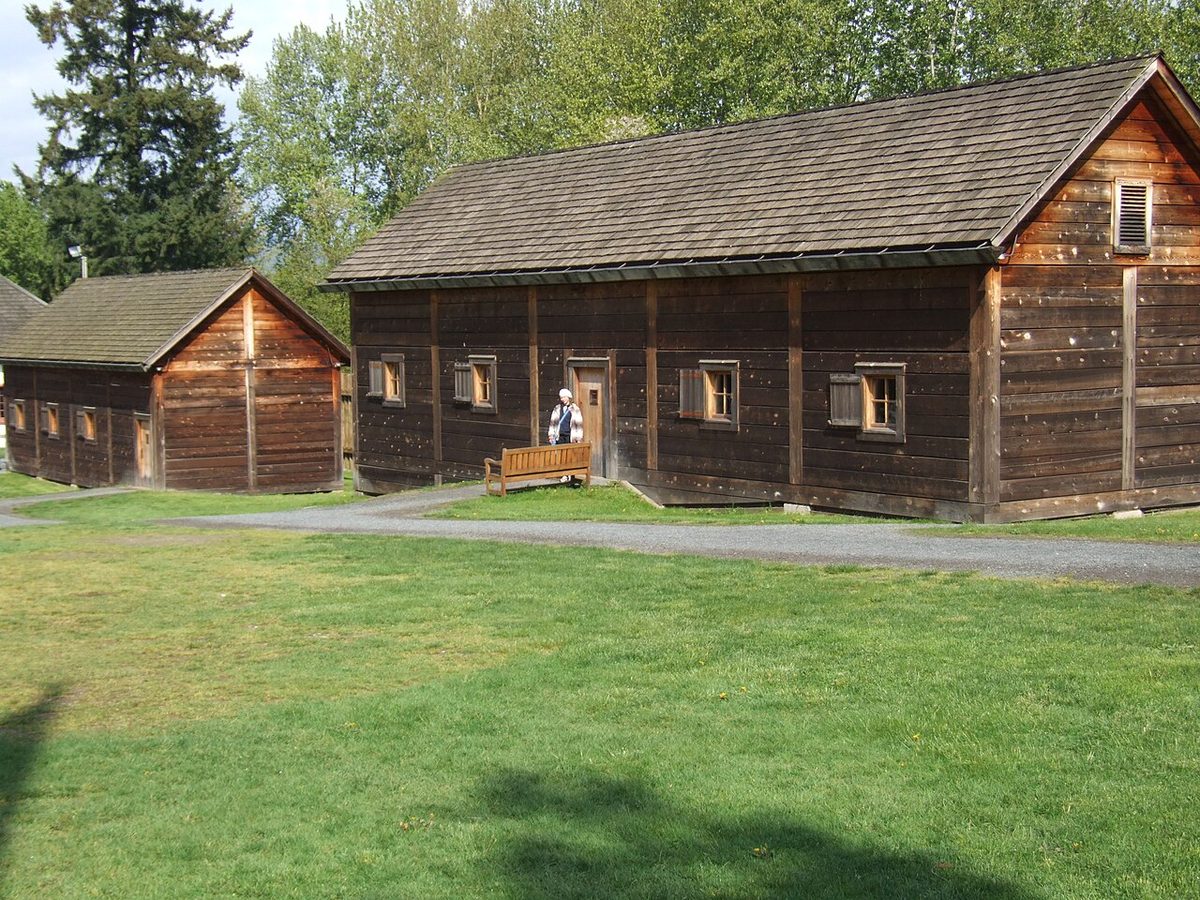
The fort you visit today sits where Yale moved it in 1839. The storehouse there, built about 1840 during his time, is the only original building left.
Related pages
Something out of date? Tell us.
Last checked October 22, 2026. Spotted something out of date? Tell us.