- What it costs
- Free with a Basic membership; Premium is a paid upgrade (what Premium adds)
- What you need
- The Geocaching® app on your phone (or a GPS unit) and a pen
- Where to start
- Langley's regional parks: Campbell Valley, Aldergrove, Derby Reach and Brae Island
- Hiding a cache in a regional park
- Needs Metro Vancouver's approval first, through an on-site meeting with park staff (policy)
- Group outings
- Under 50 people, no permit in a regional park; 50 or more needs a Special Event / Special Use Permit
- Last checked
- November 20, 2026
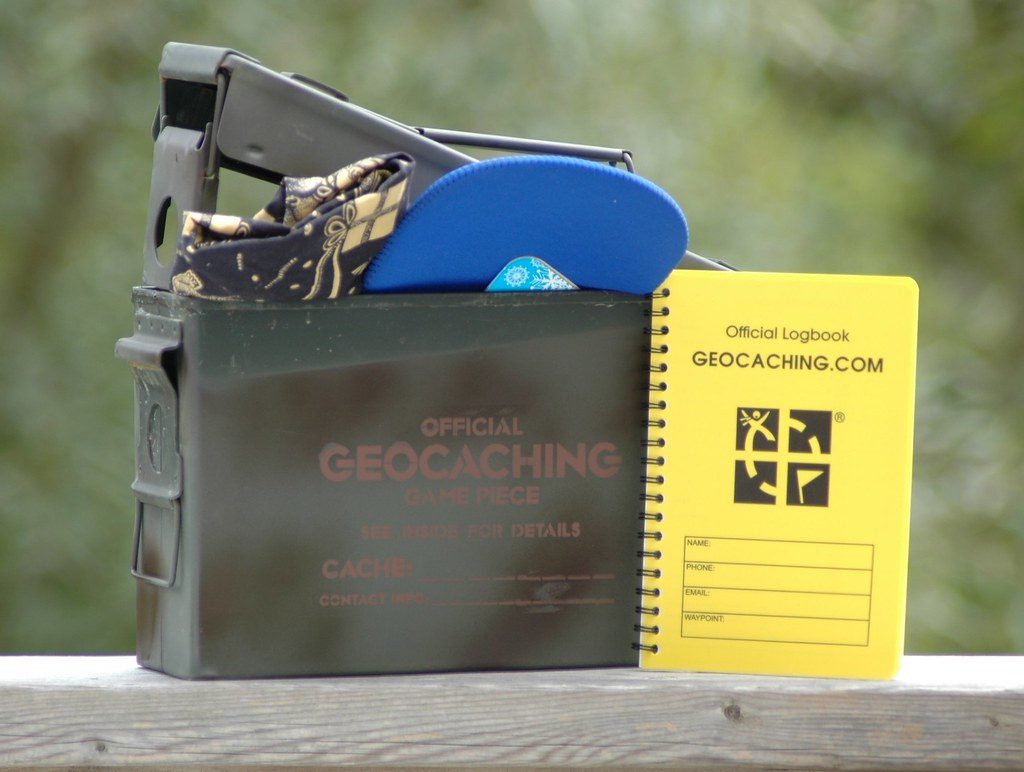
A small box with a logbook inside, tucked half a metre off a park trail: that’s what you’re looking for. Geocaching is the hunt for those boxes: people hide a container, post its coordinates, and everyone else uses their phone to track it down. Geocaching HQ counts more than 3 million of them worldwide, and they’re all hidden by players, not by a company.
Here’s how to find your first one in Langley.
1. Get the app and a free account
Download the Geocaching® app and sign up for a Basic membership, which is free. That shows you most of the caches on the map. Premium is the paid tier: it unlocks Premium-only caches, all cache types and difficulty levels in the app, search filters, offline lists and personal stats. Prices vary by country and currency, so check in the app before you buy. You don’t need it to start.
2. Pick an easy one nearby
Open the map over one of Langley’s regional parks. Look for a cache with a low difficulty and terrain rating and a bigger size, like “regular”. Size matters: a regular-sized box is far easier to spot than a micro canister the size of a fingernail. Good first parks, with parking at the trailhead:
Metro Vancouver’s rules help beginners here. In its regional parks, a cache has to sit within half a metre of the trail, reachable while you’re still standing on it. It also has to be “reasonably large” so it’s easy to find, and come with a reasonable hint. So there’s no need to wade into the bush.
3. Find it, sign it, put it back
Walk to the coordinates, read the hint, and look. Geocaches never require digging. When you find it, sign the logbook, close it up and put it back exactly where it was. The cache stays for the next person. Then log your find in the app.
4. Trade fair, or don’t trade
Bigger caches often hold small trade items, which geocachers call SWAG. You can take one, as long as you leave something of equal or greater value. Bring a few small toys or keychains in your pocket. Never leave food or anything scented: Metro Vancouver bans it in park caches because it draws wildlife.
Items with a tracking code (tags or coins called trackables) are different. They aren’t yours to keep unless the item says so. Move one along to another cache, or log that you saw it and leave it where it is.
5. Stay off the sensitive spots
Metro Vancouver doesn’t allow geocaching, Pokémon GO or similar phone games in park reserves, ecological conservancy areas or anywhere closed to the public. Stick to trails and open areas, and leave plants, logs and wildlife homes alone.
6. Join a Cache In Trash Out
Cache In Trash Out (CITO) events are clean-ups run by geocachers. In 2026, Geocaching HQ’s two seasons run March 1 to May 31 and September 1 to November 30, and attending one earns a souvenir in the app. Events are listed in the app and on Geocaching.com. In a regional park, a meet-up of fewer than 50 people needs no permit.
Hiding your own cache in a regional park
Ready to hide one? In Campbell Valley, Aldergrove, Derby Reach, Brae Island or Glen Valley, it needs Metro Vancouver’s approval first. The policy, in short:
- New spots are approved at an on-site meeting with park staff before you place anything. Only 10 new caches are accepted in each administrative area a year.
- Containers must be at least 150 metres apart, and at least 30 metres from any stream, pond or wetland.
- Nothing goes in or hangs from trees, and nothing sits near nests, nurse logs, invasive plants or risky ground like cliffs or flood areas.
- Mark the outside “Geocache”. Inside, put your name, contact details, the date you placed it and its coordinates.
- Check on it at least once a year. A cache nobody is looking for any more comes out after a year, and anything placed without approval can be removed.
Caches also have to follow Geocaching.com’s own hiding guidelines. For a Township or City of Langley park, ask that municipality’s parks department before you hide anything.
More outside
Pair a cache hunt with one of our hikes and walks, or pick a park from the Campbell Valley, Aldergrove, Derby Reach and Brae Island guides. More ideas are on things to do in Langley.
Last checked November 19, 2026. Spotted something out of date? Tell us.