The farms that brought them home: Langley's soldier settlers after two world wars
After both world wars, Ottawa lent returning soldiers the money to farm. In Langley that meant dairy farms in Glen Valley and Fort Langley, a stump-covered lot at Coghlan, a postmaster who started out farming in Aldergrove, and ten acres across from today's Carvolth exchange.
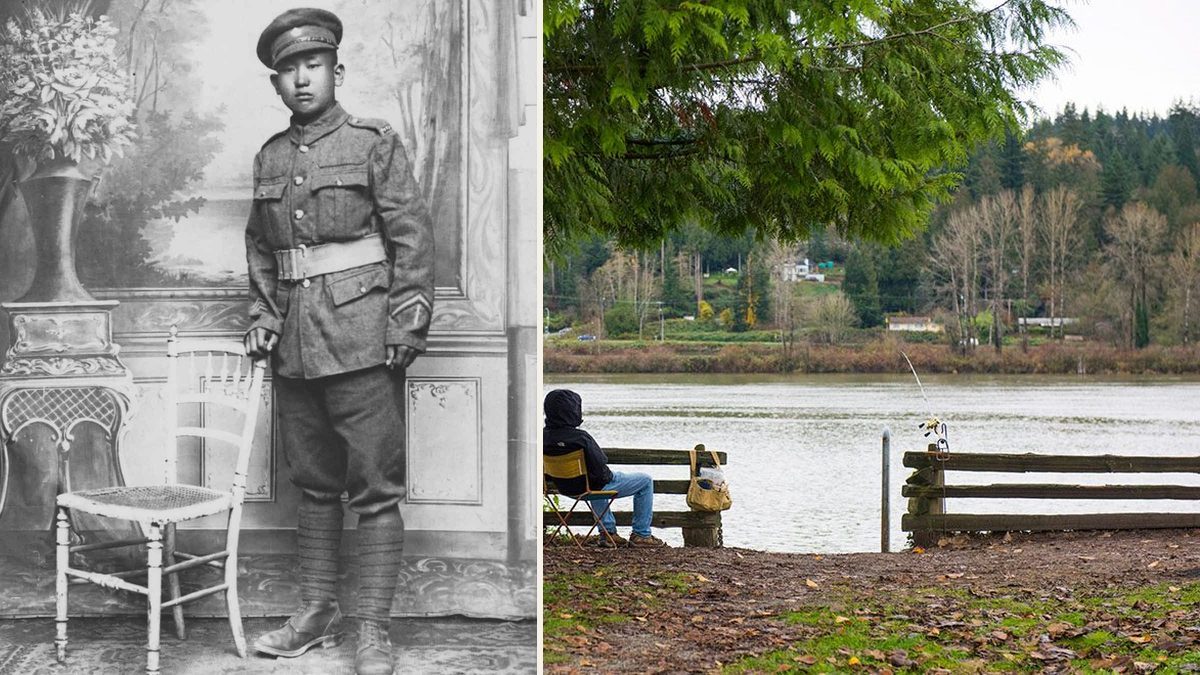
At the north end of 272 Street, where the road gives out at the Fraser, there’s a two-storey farmhouse built in 1917. Jack Hassall, a private home from the First World War (and, before that, a Boer War veteran), came to Glen Valley with his wife Christina around 1918, and the family farmed dairy cattle on the river until the late 1970s. The money to start came from Ottawa, through the Soldier Settlement Board.
Hassall House is the easiest of Langley’s soldier-settler farms to go and look at. It’s far from the only one.
Not free farms: loans
It’s tempting to say veterans were “given” land. They weren’t. The Soldier Settlement legislation of 1917 and 1919 lent First World War veterans money for land, stock and equipment, and they were expected to pay it back. After the Second World War, the Veterans’ Land Act of 1942 did the same for the next generation, with a twist that mattered in Langley: it also backed part-time farmers and veterans building their own homes. A few acres plus a job in the mill was a perfectly good VLA plan.
Debt was only part of the cost. In June 1934, after flooding in West Langley, the Vancouver Daily Province reported a councillor’s complaint about unpaid dyking assessments on several Soldier Settlement properties. Low land had to be drained and dyked, and somebody had to pay for it.
Five Langley households
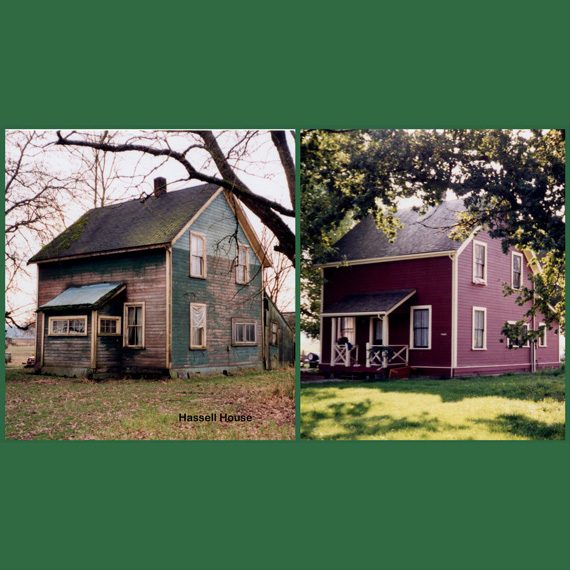
Jack and Christina Hassall, Glen Valley. Private John “Jack” Hassall took Soldier Settlement Board help to start a dairy farm in Glen Valley around 1918. The Township’s records place the family at the house at 9117 272 Street from then until the late 1970s (one record says they lived a little farther east on River Road first). The house dates from 1917. Our page on Glen Valley Regional Park tells how a fee Mrs. Hassall charged for fishing off the shore gave the spot its name, Two-bit Bar.
Seiichi and Fumie Kinoshita, Coghlan. Seiichi Kinoshita served with the 52nd Battalion in the First World War. In 1919 a Soldier Settlement Board loan helped him buy 26.82 acres at Coghlan. It was sold to him as seven acres cleared; only about half an acre was. He spent years clearing it, married Fumie Takaoka in 1931, and in 1938 a court cut the price down from about $2,000, leaving $1,160 owing. They kept improving the place until 1942, when they were removed from the coast with the rest of Langley’s Japanese Canadians, and the federal Custodian sold the farm, as it sold Japanese Canadian property across BC. He never accepted the sale. In December 1947 he wrote to officials: “I want my property back if it is at all possible.” He never got it back. (The Kinoshita family also turns up in the records behind The 39 acres at Otter Road, our story of the Chiba farm and the Japanese Canadian families who farmed around Coghlan and Otter.)
George and Isabella McDonald, Aldergrove. George Hamilton McDonald enlisted in 1916 and served in France. A veterans’ land program got him a farm at Aldergrove in 1919–20, but it didn’t pay enough to live on, so he logged in Surrey through the week and came home on weekends. In 1926 he gave up the farm and became Aldergrove’s postmaster, a job he held until 1963. In the Second World War he went back into uniform with the postal corps, from 1942 to 1945, and Isabella and two other women ran the post office while he was gone.
Frank and Nellie Bowling, Fort Langley. Frank Bowling, another First World War veteran, bought 62 acres in 1921 with Soldier Settlement help. He and Nellie raised their family on Fern Hill Farm, a dairy and bee farm on what was then Wilson Townline Road and is now 96 Avenue.
Al and Violet Reimer, near Carvolth. Abraham “Al” Reimer and Violet Mabel Hunter Reimer came to Langley in 1946 and rented first at 6595 238 Street, a spot that’s now inside Williams Park. Around 1947 they bought ten acres under the Veterans’ Land Act at 20224 Shannon Road, today’s 86 Avenue, across from where the Carvolth exchange’s parking lot is now. Al worked in sawmills and the bush; bird flu killed all their chickens, so they switched to pigs. About 1960 they moved to the Interior.
How many were there?
Nobody has published a count, and we’re not going to guess one. Five households is what the records we could check will support. The individual settlement files are held by Veterans Affairs Canada, with indexes at Library and Archives Canada, and pinning down every Langley farm would take those files plus the old land titles.
There are leads. A 1934 recollection kept in the City of Vancouver Archives says about 500 acres at Langley Prairie were sold off for returning soldiers, but its dates don’t add up, so we’re leaving it off the map until someone finds the legal plan. A 1991 Township oral history with Rosette McDonald has a section on postwar veterans’ land settlement.
If your family farmed on a Soldier Settlement or VLA loan in Langley, we’d like to hear about it: [email protected].
Go and see
- Hassall House and Two-bit Bar, Glen Valley Regional Park. Metro Vancouver rents the house out as a private home, so look from the park and stay outside the fence.
- Williams Park, where the Reimers rented before buying their VLA acres. The park itself wasn’t VLA land.
For what the Second World War left behind in Langley, from the naval radio station to the hospital, see Langley in the Second World War.