The trunks they carried: Langley's war brides, and the Dutch newcomers who came after liberation
Both world wars sent young women across the Atlantic to marry Canadian servicemen, and some of them made their homes in Fort Langley and Milner. After 1945 came Dutch families who built churches, schools and greenhouses here, and in Murrayville the orange tulips still mark the liberation.
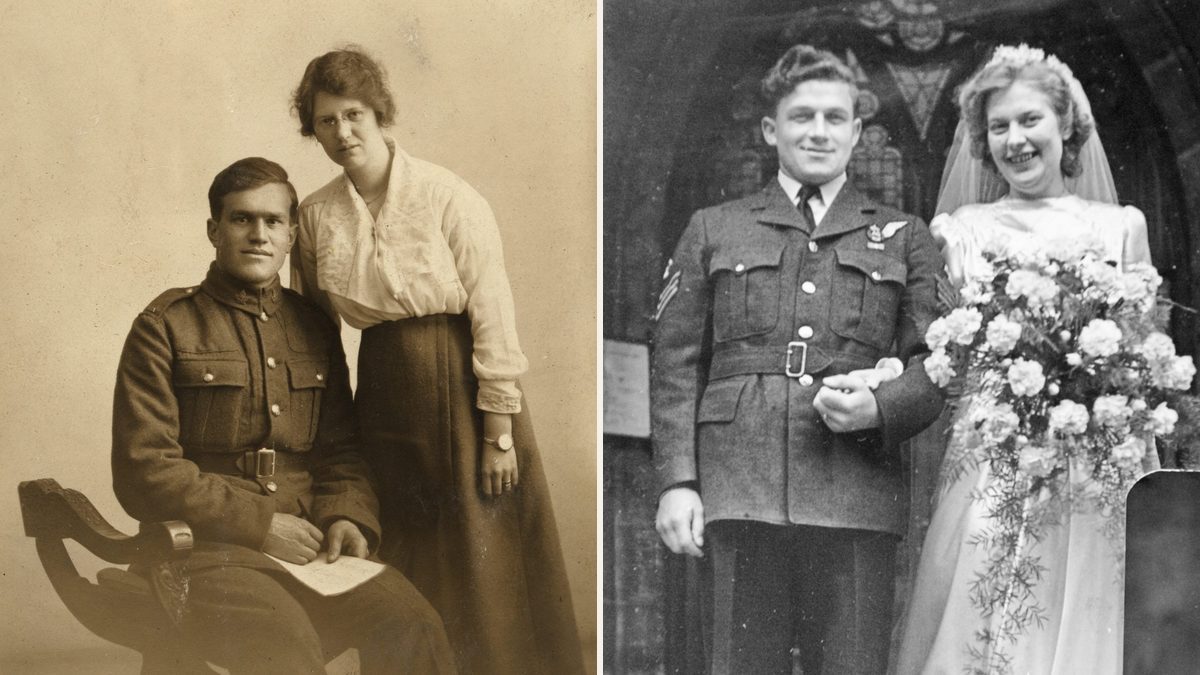
September 18, 1919, aboard the Melita, somewhere in the North Atlantic: “Hugh is sitting beside me reading one of the books you bought him.”
Grace Clark wrote that in a letter home, a day out of Liverpool, with her new husband, the Canadian soldier Hugh McKenzie Clark, beside her. They landed at Quebec on September 25. Her granddaughter, the war-brides historian Annette Fulford, kept the letter and published it a century later.
Grace is one of thousands of women who crossed the ocean to marry Canadians after the two world wars. A handful of them ended up in Langley, and their stories sit alongside a bigger one: the Dutch families who came after 1945, a few years after Canadian soldiers had liberated the Netherlands.
Brides of the First World War
Grace Gibson Clark. Grace married Hugh in April 1919, and they started married life farming at Storthoaks and Chelan, in Saskatchewan. They moved to Langley in 1942 and settled on Wilson Townline Road, today’s 96 Avenue in Fort Langley. So Grace wasn’t a 1919 arrival here; she found Langley twenty-odd years later.
Matilda Stride Goodyear. Matilda was working as a domestic servant when she married Albert Thomas Walker Goodyear, of the 16th Battalion, Canadian Expeditionary Force, at Holy Trinity Church in Eltham, London, in April 1916. They crossed to Canada on the Megantic in January 1919 and made their home in Milner.
Our First World War story has another: Jessie Wood, who married Henry Selby Hele, a Military Medal winner from Langley Prairie.
Brides of the Second
Lois Cross Bowling. Lois was working in a payroll office in Sheffield when she married Ross Bowling, an air gunner with 422 Squadron, on July 1, 1944. She came to Fort Langley in 1946 and became involved at St. George’s Church. She died in 2011, at 87.
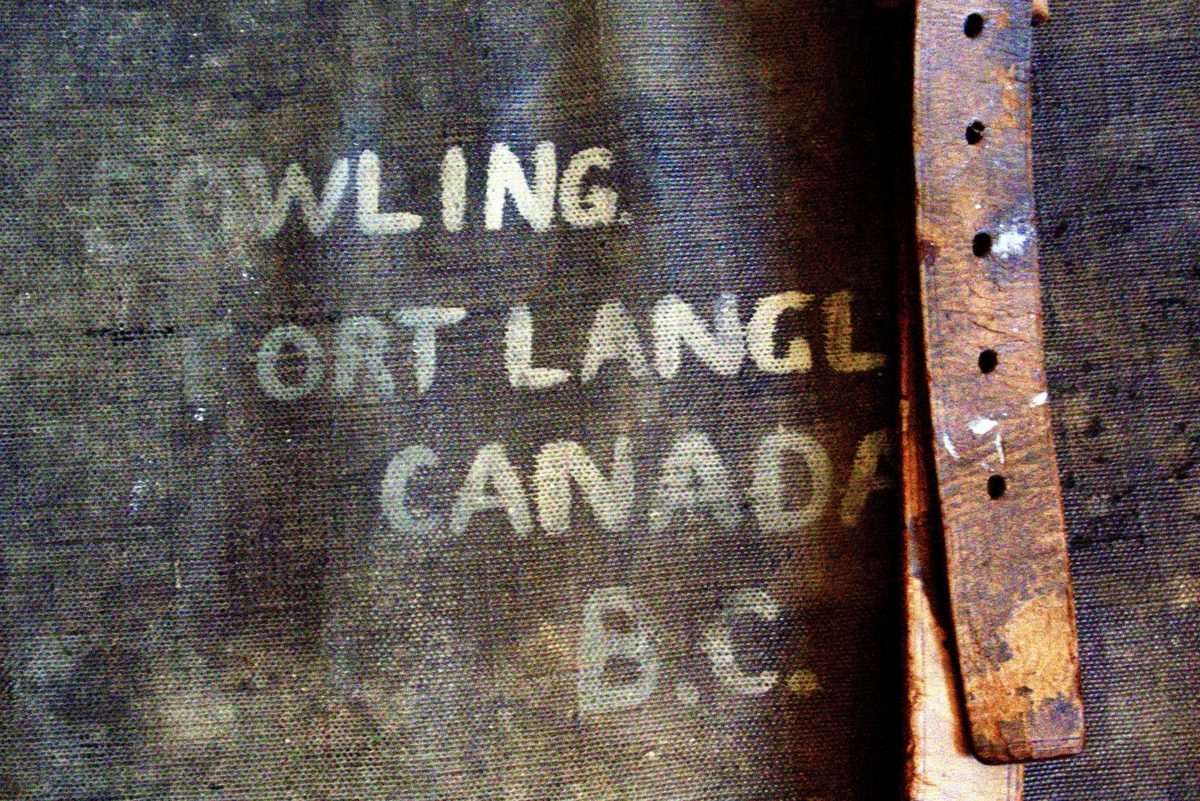
Her trunk made the trip too. It now sits in the waiting room of the historic CNR station in Fort Langley, with “Fort Langley, Canada, B.C.” painted on the side.
Theodora van Asselt. Theodora was a nursing student in Utrecht in 1945 when she met Sergeant Major Gordon McIntosh of the 5th Medium Regiment, Royal Canadian Artillery. She came to Canada as a war bride in 1948, lived in Quebec, and became a Canadian citizen in 1956. In 1980 she moved to Langley with her second husband, Ken Green. She died here on January 5, 2020, at 98.
After liberation: the Dutch
Canadian troops did much of the fighting to free the Netherlands in 1944 and 1945, and the friendship that came out of it is real. It’s also tempting to say that’s why so many Dutch families came to the Fraser Valley afterwards. The fuller answer, from the Canadian Museum of Immigration at Pier 21: war-damaged farmland and too few jobs at home, a farm-family scheme the two governments set up, and churches that helped find newcomers places to land. Every family had its own reasons.
Not everyone stayed. A 2026 exhibition organised by the Canadian Embassy in the Netherlands, From Polders to Prairies, tells of Philip aan 't Goor, who flew to Langley in 1949 to work on a farm. By July 1950 the heavy work, the heat and homesickness had him writing to his family for help getting home.
Plenty did put down roots:
- Churches. Willoughby Christian Reformed Church was founded in 1950. “Our church was filled with Dutch immigrants back then,” Roland Storteboom remembered in 2013. A Canadian Reformed congregation first met in a rented church at Otter Road and Fraser Highway, holding its first consistory on March 7, 1954, with 13 families that soon grew to 16, or 78 people; it’s now Cloverdale Canadian Reformed Church. Langley Canadian Reformed Church was instituted in 1976. Our places of worship directory has service times for congregations across Langley.
- Schools. Langley Christian School opened in 1955 with 17 students in a two-room schoolhouse, started by the consistory of the First Christian Reformed Church and meant from the outset to be open to families of any denomination. Credo Christian’s Langley elementary school followed in 1986.
- Greenhouses. A court judgment records that the Houweling family emigrated in 1951 and that the father started his greenhouse in 1956. The company’s own history describes Cornelius Houweling’s small floral greenhouse and berry farm in Langley as the start of the business that carries the family name.
Orange tulips in Murrayville
On October 8, 2019, the Township planted 7,500 orange tulip bulbs at the Derek Doubleday Arboretum for Liberation75, the 75th anniversary of the liberation of the Netherlands. The Netherlands Consul-General, Henk Snoeken, came to the planting, and the bulbs bloomed the next spring.
They’re a spring thing, so don’t go looking in November. Come April, it’s worth a walk through the arboretum to see if they’re still coming up. (We haven’t found an annual May 5 Liberation Day event in Langley. If there is one, tell us.)
Go and see
- Willoughby Christian Reformed Church, 20525 72 Avenue. It’s a working church, not a museum; its website has service times.
Have a war bride or a 1950s Dutch newcomer in your family story? We’d love to hear it: [email protected].