The bomber that came up from the bottom of Saanich Inlet
The Canadian Museum of Flight at Langley's airport has the only Handley Page Hampden on display anywhere in the world. It crashed into the sea in 1942, lay 600 feet down for more than four decades, and was rebuilt by volunteers. Plus the other wartime aircraft worth seeing.
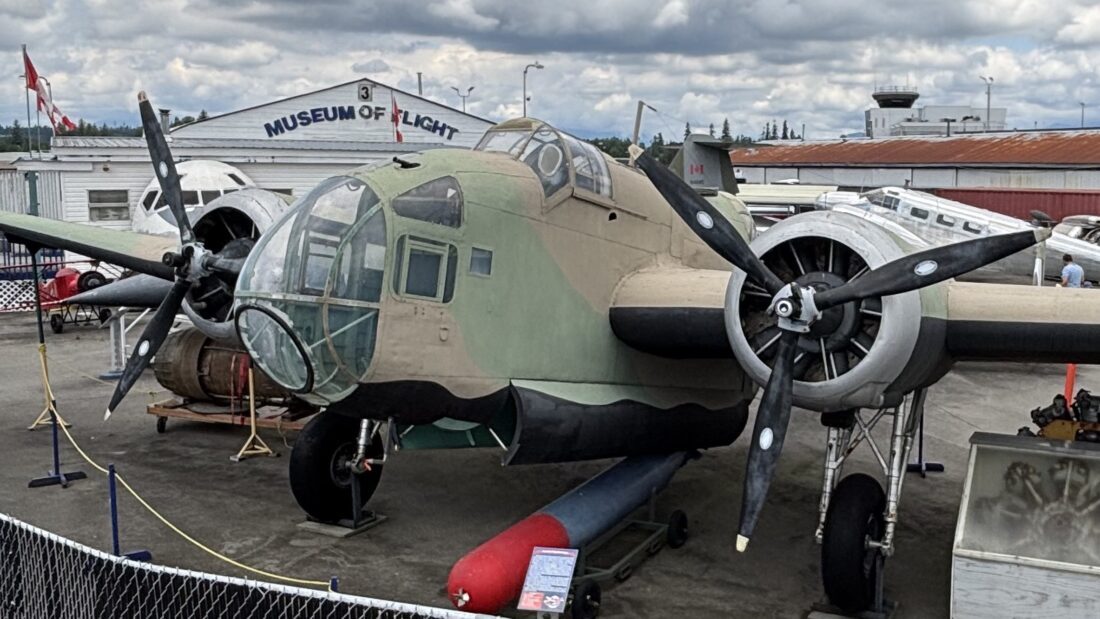
On November 15, 1942, a twin-engined Handley Page Hampden was practising torpedo drops over Saanich Inlet, near Patricia Bay on Vancouver Island, when it went into the water and sank. The pilot of a passing Stranraer flying boat saw it happen, and all four crew were plucked from the water within minutes. The aircraft itself kept going, down about 600 feet, and stayed there.
It had flown about a hundred hours.
Found, raised and rebuilt
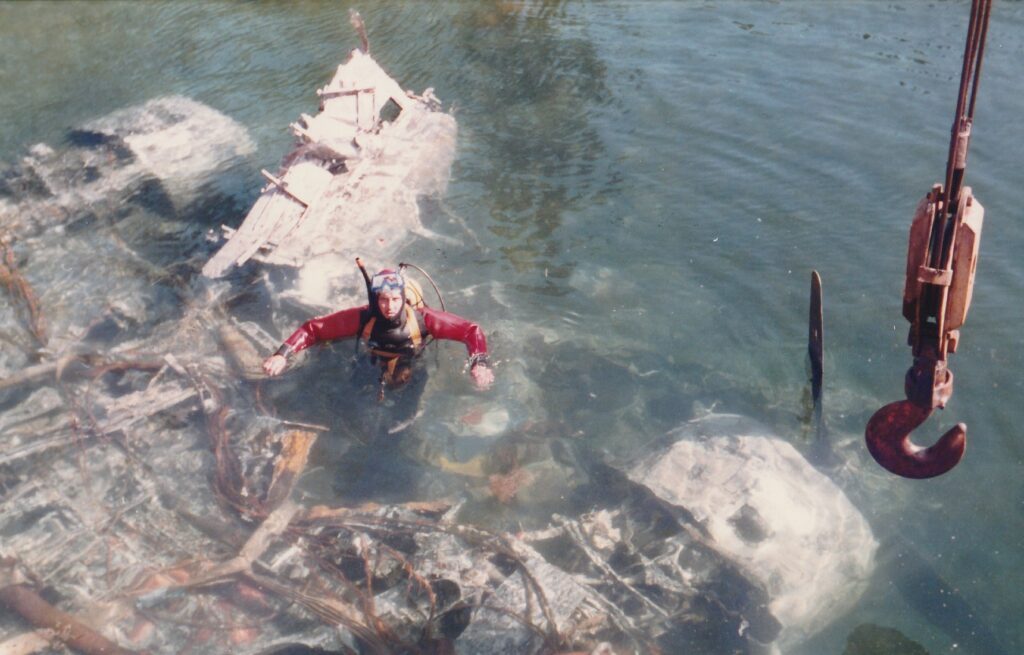
In 1985 a team searching with sonar and an underwater camera found the Hampden on the bottom of the inlet, and with the help of a remotely operated submersible and a towing company, brought it up. What came out of the water was a wreck, but a remarkably complete one.
The rebuild fell largely to one museum volunteer, Fred Gardham, who kept at it into his eighties. Where parts were missing he used pieces and patterns from two other Hampdens that had crashed in B.C. during the war, one on Mount Tuam on Saltspring Island and one near Ucluelet. The result, serial P5436, is parked at the Canadian Museum of Flight at Langley Regional Airport, and the museum says it is the only Handley Page Hampden on display anywhere in the world.
Why a Hampden was here at all
The Hampden was a British twin-engined bomber, and 1,432 were built, 160 of them in Canada by Victory Aircraft. By 1942 some were serving as torpedo bombers, and the RAF’s No. 32 Operational Training Unit at Patricia Bay used them to train crews to fly low over the water and put a torpedo where it needed to go. P5436 was on one of those training flights when it went down.
The other wartime aircraft
The museum has a small group it calls its “octogenarians,” aircraft built in Canada in 1941: a de Havilland Tiger Moth and a Harvard II, both trainers, and a Bristol Bolingbroke bomber. From the same years there’s a Douglas DC-3, a Fleet Finch, a Stearman and a Westland Lysander. Pilot Officer Ian Matheson of Milner, one of Langley’s war dead, was killed in 1942 in a Harvard like the one here. (Their stories are in our piece on Langley in the Second World War.)
The museum’s volunteers have more on the go, with a Fairchild Cornell, a Norseman and another Bolingbroke on the restoration list.
Go
The museum is in Hangar 3 at Langley Regional Airport, 5333 216 Street. Check its website for opening hours and admission before you go. Langley’s 746 Lightning Hawk air cadets parade at the same airport, in Hangar 5.
One thing worth knowing: in late 2024 the museum announced it will eventually move to a larger site at Pitt Meadows Regional Airport, a move it expected to take around five years. For now it’s still here, so if you’ve never been, this November is a good time to go and stand under that Hampden.
See also our Canadian Museum of Flight directory page.