Indigenous Veterans Day: the Kwantlen and Métis men of Langley who served
November 8 is Indigenous Veterans Day. In Langley that means the Allard family of Fort Langley, Tommy Fillardeau of McMillan Island, Wilfred Gabriel of Kwantlen, and others who served in both world wars, often with little recognition when they came home.
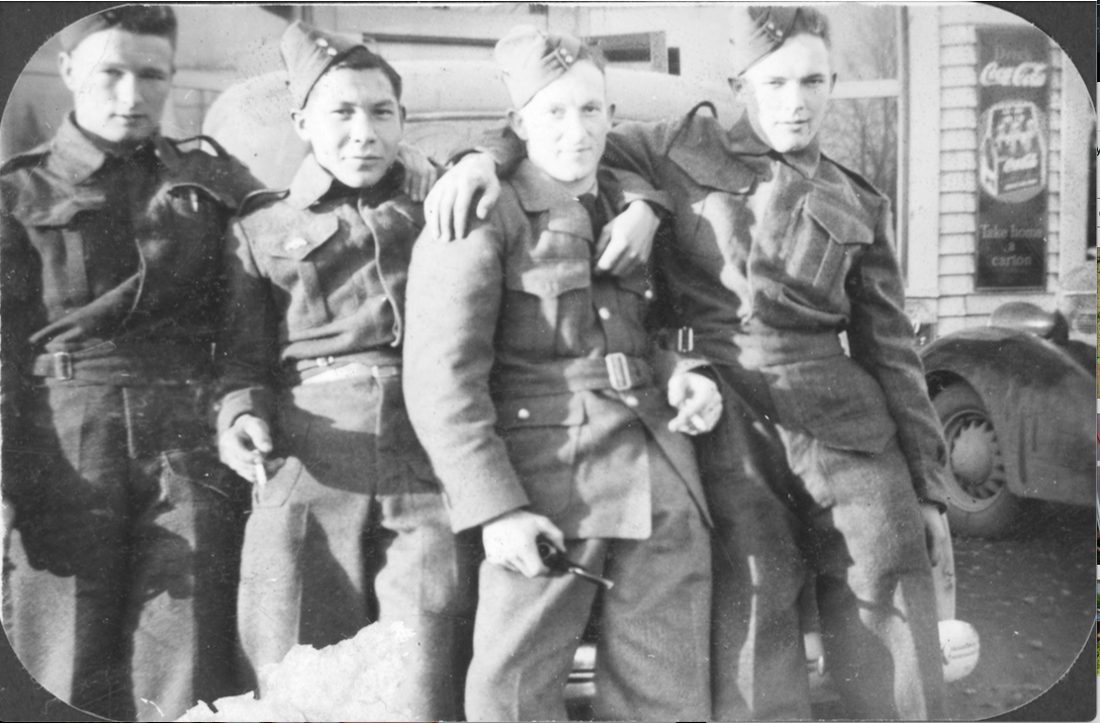
There’s a photograph in the Langley Centennial Museum’s collection of four young men in battledress outside the Edal Café, arms slung around each other, smiling for the camera. Two of them are George and James Hadden of Fort Langley, who would both be killed in Normandy in the summer of 1944. One is Bob Brown. And one is Tommy Fillardeau, a fisherman from the Kwantlen reserve on McMillan Island.
November 8 is Indigenous Veterans Day, set aside to remember the First Nations, Métis and Inuit people who served Canada in uniform. In Langley, some of those stories go back to the Hudson’s Bay Company fort.
The Allards of Fort Langley
Ovid Allard was the Hudson’s Bay Company’s Chief Trader at Fort Langley, and the Langley Heritage Society traces the Allard family’s Indigenous roots through Seraphine, from the Port Townsend area. In the First World War, the family’s young men went overseas.
Private Eugene Allard, a Fort Langley logger the family called “Shorty,” served with the 2nd Canadian Mounted Rifles and was killed on October 30, 1917, east of Ypres during the Passchendaele fighting. He has no known grave; his name is on the Menin Gate in Belgium. His brother Alexander was gassed and died in 1924. His youngest brother, Billy, won the Military Cross at Vimy Ridge. Allard Crescent in Fort Langley carries the family name.
The family served again in the Second World War. On the Stó:lō Veterans Pole at Coqualeetza in Chilliwack, the Langley Heritage Society has found William and George Allard among the First World War names, and Ovid and Lawrence Allard among the Second.
Tommy Fillardeau
Thomas Fillardeau was of Métis and Kwantlen heritage; his great-grandfather had worked for the Hudson’s Bay Company at Fort Langley. He grew up on the Kwantlen reserve on McMillan Island and fished the river for a living. In the Second World War he served with the Irish Fusiliers. He came home, and he died on October 29, 1973.
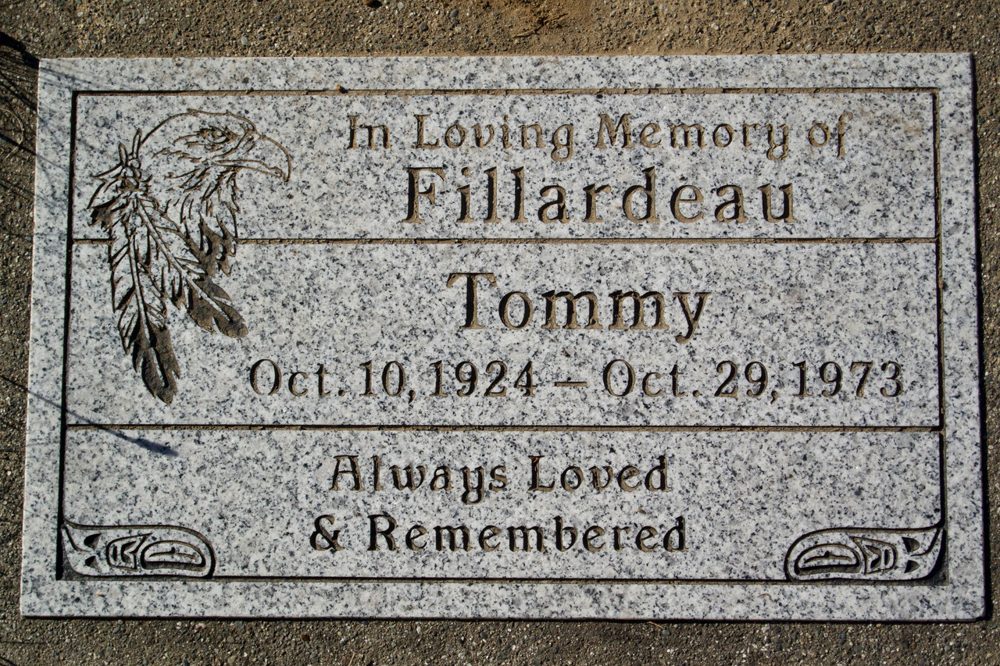
He wasn’t the only Fillardeau to serve. The Stó:lō Veterans Pole also carries the names of James and Earl Fillardeau from the Second World War, alongside James Fidele and Albert Wicks.
Wilfred Gabriel
Wilfred Gabriel, known as Stittum, was a member of Kwantlen First Nation who served in the Second World War. He is buried in the military section of the Fort Langley Cemetery, and his name is on the Aboriginal Veterans Tribute Honour List.
Coming home
When Indigenous veterans came home, many faced barriers that other veterans didn’t, to benefits, to voting and to their status, and it wasn’t until 1995 that their service was formally recognised as a group. That’s a big part of why Indigenous Veterans Day exists, and why local historians like the Langley Heritage Society’s Mark Forsythe have worked to find and tell these stories.
Marking the day in Langley
- Indigenous Veterans Day at Langley City Hall, Sunday, November 8, 10 to 11:30 am, at 20399 Douglas Crescent. The City describes it as a conversation honouring First Nations, Métis and Inuit people who served, with light refreshments. Free. Event details.
- On November 11, Fort Langley’s ceremony has included an Honour Song by Kwantlen First Nation Elders and drummers, and a Métis lament. See our Remembrance Day page.
If your family has a story of an Indigenous veteran from the Langley area, the Langley Heritage Society and the Langley Centennial Museum would welcome it. So would we: tell us.
We will remember them.