- Communities covered
- Aldergrove, Coghlan, Fort Langley, Glen Valley, Langley City, Milner, Murrayville, Otter, Patricia, Willoughby
- Oldest name
- Langley, from Fort Langley in 1827
- Best book on it
- Roads & Other Place Names in Langley, B.C. by Maureen Pepin (1998), recommended by the Langley Heritage Society
- Official name records
- BC Geographical Names
- Last checked
- November 23, 2026
Most of Langley’s community names come from one of three places: a person (a fur-company director, a British governor, a colonel, a pioneer family), the land (alders, a valley), or the post office, which often fixed a name for good. Langley itself is named after Thomas Langley, a Hudson’s Bay Company director who never set foot here. Below, A to Z, is where each name came from and the year it stuck.
Where Langley’s community names come from, A to Z
Aldergrove (1885). Before it was Aldergrove, the crossroads where Yale Road met the trail south to the States was Shortreed’s Corners, after Robert Jr. and Duncan Shortreed, Ontario brothers who ran the general store. The Township’s history says settler George Bruskey suggested “Alder Grove” for the alder trees all around, and the Langley Heritage Society places those stands on the hills near the Bruskey farm. The Alder Grove post office opened October 1, 1885, with Edward Whyman as postmaster, according to BC Geographical Names. That record adds two good details: a 1920s theory that a big fire in the 1840s or '50s explains why the alder was so thick, and that by the early 1920s residents preferred the one-word spelling. More in our Aldergrove guide.
Coghlan (1910). Henry and Nathaniel Coghlan, brothers from Atwood, Ontario, homesteaded either side of the road along what is now Telegraph Trail around 1884. When the BC Electric interurban opened in 1910, its stop here was named for them, in honour of the roughly 20,000 railway ties the brothers cut for the line, according to the Township’s history. A Coghlan post office ran from 1911 to 1956.
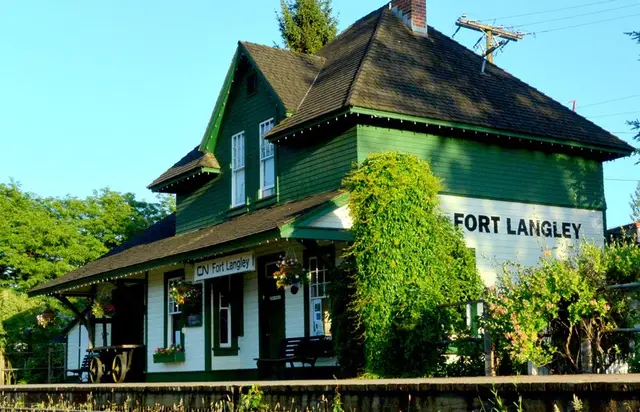
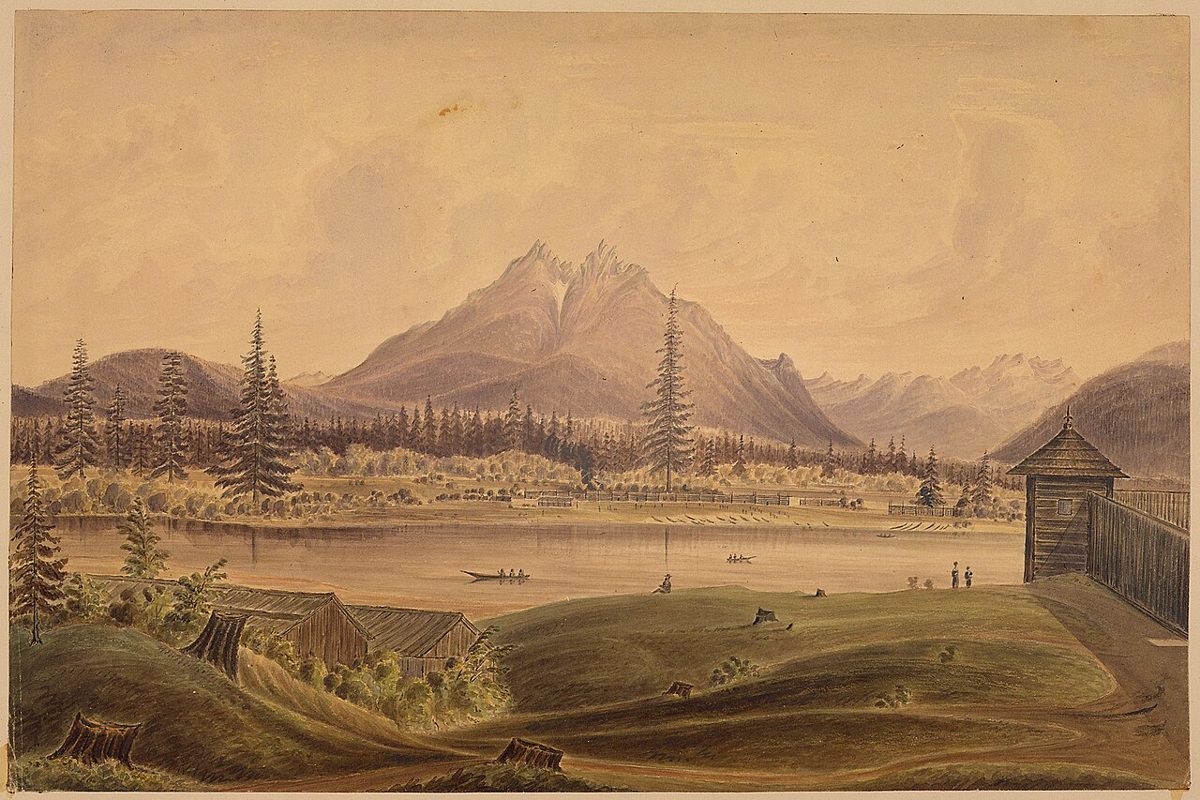
Fort Langley (1827). In 1827 the Hudson’s Bay Company built a trading post on the Fraser and named it after Thomas Langley, a London director of the company. A City of Langley history piece by Warren Sommer notes he was also a director of the Bank of England, never came to North America, and died in 1829, two years after the fort was built. The first fort stood downriver at Derby; it moved to today’s village site in 1839. Even the post office had trouble deciding: the provincial record has it as Langley, then “Langley Fort” in 1912, then Fort Langley in 1925, while the Township dates the switch to 1912. Visit what’s left at Fort Langley National Historic Site.
Glen Valley (about 1890). Up in the northeast corner by the river, this was first Cromarty’s Prairie, after William Cromarty, the HBC’s head cooper at Langley, then Beaver Valley. Letters written in 1927 and kept in the BC Geographical Names file say two or three of the first settlers chose “Glen Valley,” probably around 1890, and that Gilbert McKay and William Cornock settled on it when residents first asked the government for a school. The post office lasted from 1904 to 1968.
Langley City (1955). The City was Langley Prairie, the commercial strip that grew up along Yale Road. When it split from the Township on March 15, 1955, the new city thought about choosing a different name but kept Langley and dropped “Prairie,” a word that sounded old and rural to a place that wanted to look progressive, as the City’s 70th anniversary series tells it. The post office became plain Langley on June 1, 1955. Our neighbourhoods guide sorts out which Langley is which.
Milner (1908). Milner sits on the old Hudson’s Bay Company farm, started on Langley Prairie in 1833. The post office opened April 1, 1908, and a 1910 British Columbian article quoted in the Township’s history says the place got its name “in compliment to Lord Milner.” The Langley Heritage Society identifies him as Lord Alfred Milner, the British statesman and colonial administrator. The village grew where the interurban crossed Glover Road and the road to Murrayville.
Murrayville (1911). This one has two versions. The Township’s history and the Langley Heritage Society credit Paul Murray (and his wife Lucy), who came from Ontario in May 1874 with three sons. Their son Billy built a hotel at the crossroads, and with a quarter section on each corner, it became Murray’s Corners. The post office there opened in 1883 as Langley Prairie and was renamed Murrayville on May 16, 1911. Wikipedia’s Murrayville article tells it differently: it names Alexander Murray, who drowned in the Fraser in January 1884 trying to save a friend, and dates the post office name to 1925. The provincial names record for Murrayville has no origin notes online yet, so it can’t settle the question. See the Murrayville guide.
Otter (1893). The Otter post office in the Salmon River uplands opened May 1, 1893, and closed in 1917. The Langley Heritage Society says the name honours Colonel William Otter, who went on to command the Canadian contingent in the Boer War. The name lives on in the Otter Co-op.
Patricia (1912). Southeast Langley’s Patricia grew up on Townline Road (264 Street), about two miles north of the border, with many settlers from the United States. Its school opened in 1891 as South Aldergrove School and was renamed Patricia in 1912, after the youngest daughter of the Duke of Connaught. A post office ran from 1912 to 1917, and the Patricia Community Club built its first hall in the 1920s.
Willoughby (1921). Willoughby is the newest name on this list. The Langley Heritage Society says it comes from Willoughby Singer, whose family ran the store and post office beside Willoughby Hall on 208 Street in the 1920s. The Township dates that post office from May 1, 1921, to December 15, 1927, at a small settlement near 208 Street and 80 Avenue. Today the name covers a much bigger area; see our Willoughby guide.
What about Brookswood and Walnut Grove?
Neither name has a recorded origin in the official sources. BC Geographical Names has Brookswood in the BC Directory from 1929, with a short-lived post office from 1925 to 1926, but doesn’t say who or what it honours. The Township’s history records Fred Brooks building the Brookswood Club Association Hall in the 1930s (now the Langley Playhouse), without linking the family to the name. Walnut Grove’s post office opened April 1, 1913, in the house of Charles Yeomans, whose family homesteaded near 96 Avenue and 208 Street in the 1880s. Why “walnut” isn’t written down anywhere public. If your family knows, tell us.
Where to dig further
Maureen Pepin’s 1998 book is the deep reference for road and community names, and the Langley Centennial Museum and Langley Heritage Society are the places to ask. Many old road names are still on Township heritage markers; our explainer on why Langley’s roads bend covers the grid that replaced them. For the bigger picture, start with the history of Langley.
Something out of date? Tell us.
Last checked November 22, 2026. Spotted something out of date? Tell us.